Sound Baths: High-Margin Revenue With Low Overhead Costs
The sound healing market hit $8.68B by 2035. Studios earn $45-55 per group ticket and $1,000+ for corporate sessions with minimal ongoing costs after instrument investment.
Key Takeaways
- Market momentum is undeniable: The sound healing market grew from $3.2 billion in 2024 to a projected $8.68 billion by 2035, with North America leading adoption and studios selling out 80% of sound bath events.
- Margin structure favors private bookings: Group sessions typically earn $45–$55 per person, while private events command $450+ flat rates and corporate sessions reach $1,000–$2,150 for a single hour, all with minimal ongoing costs after initial instrument investment.
- Low barriers to entry meet scaling challenges: Crystal singing bowls and gongs are easy to play, but studios face competition from pop-up operators, certification debates, and decisions about whether to hire independent contractors or train in-house staff.
- Hybrid formats maximize existing assets: Studios are integrating sound into vinyasa and restorative classes as 10-minute "treats" to drive upsells to full standalone sound bath events, avoiding the need to block premium evening slots.
- Corporate wellness represents untapped upside: With employee burnout at record highs in 2026, HR departments are actively seeking passive recovery tools, creating a high-ticket revenue stream most studios aren't pursuing.
Why Sound Baths Moved From Niche to Mainstream in 2026
Sound baths went from a niche yoga-studio add-on to a headline wellness story in 2026, driven by a single operational advantage: accessibility. The format requires no flexibility, no prior meditation practice, and no active participation, making it an easier entry point than yoga or seated mindfulness.
That accessibility explains the format's expansion beyond traditional wellness venues. Sound baths now appear in corporate conference rooms, wellness retreats, churches, and performing arts centers, not just yoga studios. The sound healing market is expected to reach $8.68 billion by 2035, growing at a CAGR of 9.5%, with North America dominating the market in 2024.
For studio operators, the trend's timing matters. Sound therapy has become a signature offering at luxury hotels as part of the sleep tourism market, which hit $74.54 billion in 2024. Studios that add programming now can capitalize on breakout momentum while competitor differentiation remains achievable.
What the Margin Structure Actually Looks Like
Group session tickets are typically set at $45 per person, though some practitioners charge upwards of $55 per person for smaller, more intimate venues. Private events offer a better margin profile: a starting price for one-on-one or two-person sessions is around $150, and for group private events, around $300.
The corporate channel changes the economics entirely. Corporate sound baths command roughly $1,000–$2,150+ for a single one-hour session. Private events offer a better margin profile than group tickets, with target flat rates for private bookings at $450.
Once invested in instruments and training, sound healing has minimal ongoing expenses, requiring only the practitioner, instruments, and space. Many studios manage margins by using practitioners on a fee-per-session basis (80% in 2026 projected down to 40% by 2030), assuming practitioners are independent contractors rather than salaried employees. This model lets studios test demand without payroll commitments, though it limits scheduling control and creates vulnerability if a popular practitioner leaves.
Initial Investment and Ongoing Costs
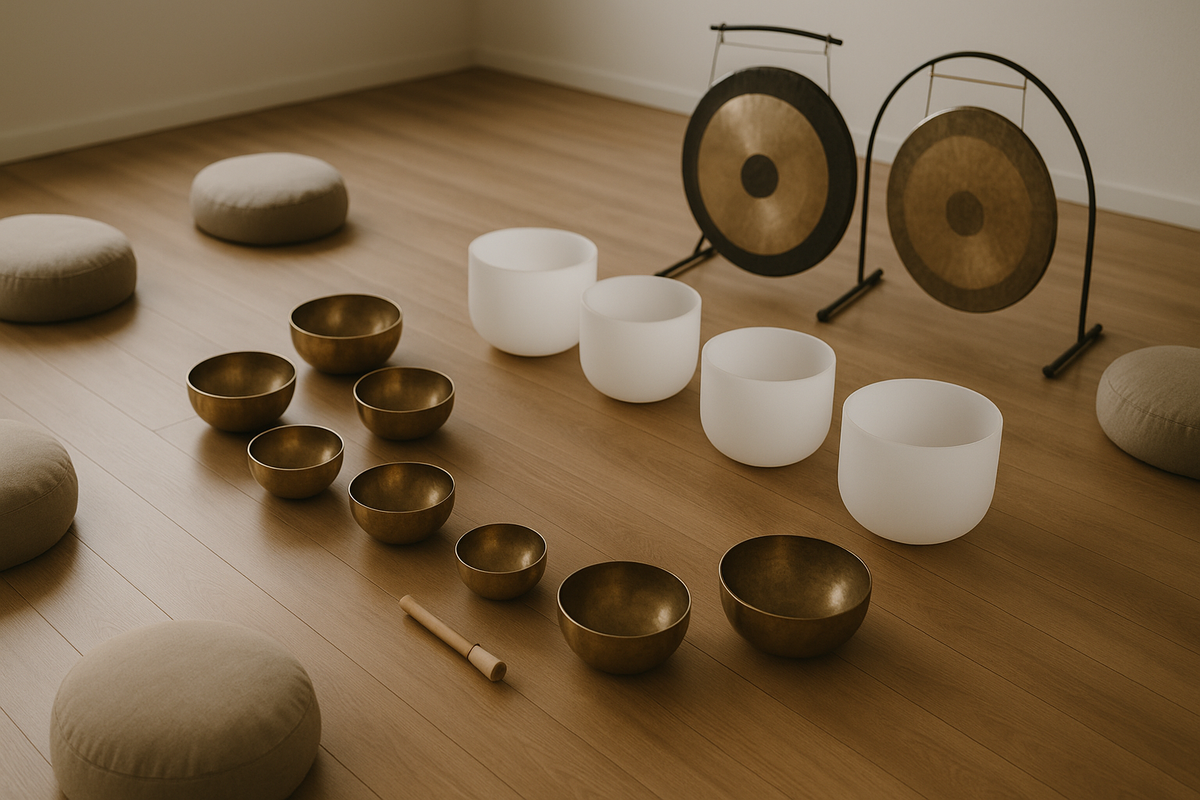
The upfront investment depends on certification path and instrument quality. Certification prices start at $799, with most programs ranging 40–200 hours depending on depth. To complete certain courses, you'll need a 30″ or larger gong, soft mallets, crystal singing bowls, and a decibel meter.
The good news: crystal singing bowls and gongs are relatively easy to play, and even a beginner can make them sound pleasant. The bad news: not all instruments are created equal, and cheap bowls produce flat tones that undermine the therapeutic premise.
The Certification Debate and What It Means for Liability
The sound bath world splits sharply on certification. Critics argue certification is "just a piece of paper" and beware of programs offering quick "certifications" with minimal requirements. On the other side, a sound bath certification offers authority to walk into a corporate boardroom and offer high-ticket group sessions—corporations want certified sound healers who understand stress reduction and safety protocols, not just someone with a singing bowl.
True mastery of playing techniques requires time and practice—beware of weekend workshops or 35-hour courses; choose instructors with at least 10 years of full-time experience. Yet the format's simplicity means studios can begin offering sessions after shorter training periods than most yoga teacher certifications require.
Editorial analysis, not reported fact: For studio operators, the certification question is less about skill development and more about risk management. If a client reports adverse effects (dizziness, anxiety, or hearing discomfort), does your liability insurance cover uncertified practitioners? Can you defend your vetting process if challenged? Studios that plan to pursue corporate contracts or partner with healthcare providers should prioritize practitioners with recognized certifications and documented training hours.
How Studios Are Integrating Sound Without Cannibalizing Core Classes
Studios in cities from Portland to Berlin have quietly restructured their schedules around it, adding "sound-integrated flow" or "vinyasa + sound bath" to timetables. The hybrid model solves a scheduling problem: full sound baths require 60–90 minutes during premium evening slots that might otherwise hold high-attendance vinyasa classes.
The workaround: teachers often provide mini-immersion "treats" at the end of regular yoga classes, promoting upcoming full-scale sound events at the studio. A 10-minute sound experience during savasana introduces the format, builds demand, and creates an upsell path to standalone events without displacing existing programming.
Sound baths are often convened in retail yoga studios—enclosed, controllable spaces already associated with self-care—thereby creating additional income for studios and yoga teachers. This matters because the format's venue flexibility means studios face competition from pop-up operators using rented church basements, community centers, and coworking spaces with lower overhead.
Corporate Wellness as the Hidden Revenue Accelerator
In 2026, employee burnout is at an all-time high, and HR departments are actively seeking "passive" recovery tools like sound baths. The corporate wellness channel offers studios a revenue stream with different economics than consumer bookings: higher price points, weekday daytime availability, and longer booking windows.
Most studios aren't pursuing this channel because it requires different sales processes (RFPs, vendor onboarding, certificates of insurance) and positioning (stress reduction outcomes, not spiritual experience). Studios that build corporate relationships can fill otherwise-empty midday slots and reduce dependence on evening and weekend consumer traffic.
Competitive Dynamics: Studio Operators vs. Independent Practitioners
Studios face competition from independent practitioners who operate with near-zero overhead. One operator reported putting on more than 50 events in 2025, with over 80% of them selling out, demonstrating the format's scalability. Independent operators can undercut studio pricing while maintaining margins, since they pay only for venue rental rather than carrying fixed studio overhead.
Studios counter with three advantages: existing customer relationships, predictable venue access, and the ability to bundle sound baths with other services. A recent studio opening in Las Vegas offers "Luxury Sound Bath" sessions at $35 and "Sound Bath, Breathwork and Bliss" at $22, using aggressive pricing to build market share in a competitive wellness market.
What This Means for Studio Operators
Editorial analysis, not reported fact: Sound baths solve a specific business problem—how to generate revenue from clients who want wellness benefits without physical intensity—but they create new challenges around scheduling, practitioner management, and competitive positioning. Studios should test demand with contracted practitioners before investing in instruments or in-house training, using hybrid formats to gauge interest without displacing proven programming.
The corporate wellness opportunity deserves more attention than most studios give it. A single $1,500 corporate booking generates the same revenue as 30+ consumer tickets, with simpler logistics (one client contact, one invoice, predictable group size). Studios within 15 minutes of office districts or corporate parks should build relationships with HR departments and wellness coordinators before competitors claim those accounts.
The certification question matters most for liability and positioning, not skill development. Studios pursuing corporate contracts, healthcare partnerships, or premium pricing should require practitioners to carry recognized certifications and professional liability insurance. Studios focused on consumer bookings in competitive markets may find that practitioner reputation and client reviews matter more than credentials.
Sources & Further Reading
- Sound Healing Market projections through 2035, including growth rates and market size forecasts
- Detroit News coverage of sound bath business expansion, including operator case studies and venue diversification
- Pricing models and revenue benchmarks for therapeutic sound bath experiences, covering group, private, and corporate pricing
- Academy of Sound Healing on certification and income diversification, with focus on corporate wellness opportunities
- Certification requirements and training program evaluation criteria, including instrument requirements and program hour ranges
- How yoga studios are integrating sound baths into existing class formats, covering hybrid models and upsell strategies
Editorial coverage of publicly reported industry developments. Yoga Studio Insider has no commercial relationship with any companies named.