Private Yoga Session Pricing: 2026 Rates & Strategy Guide
National private yoga session rates range $60–$150/hour by format and experience. Learn the labor reality, specialization premiums, and package strategies.
Key Takeaways
- National private session rates range from $60 to $150 per hour depending on format, with in-studio sessions averaging $60–$120, at-home sessions $80–$150, and online sessions $40–$100 as of 2026.
- Experience-based pricing tiers provide a clear framework: beginner instructors (1–3 years) should charge $60–$80/hour, intermediate (3–7 years) $80–$120/hour, and advanced instructors with specialized certifications $120–$200+/hour.
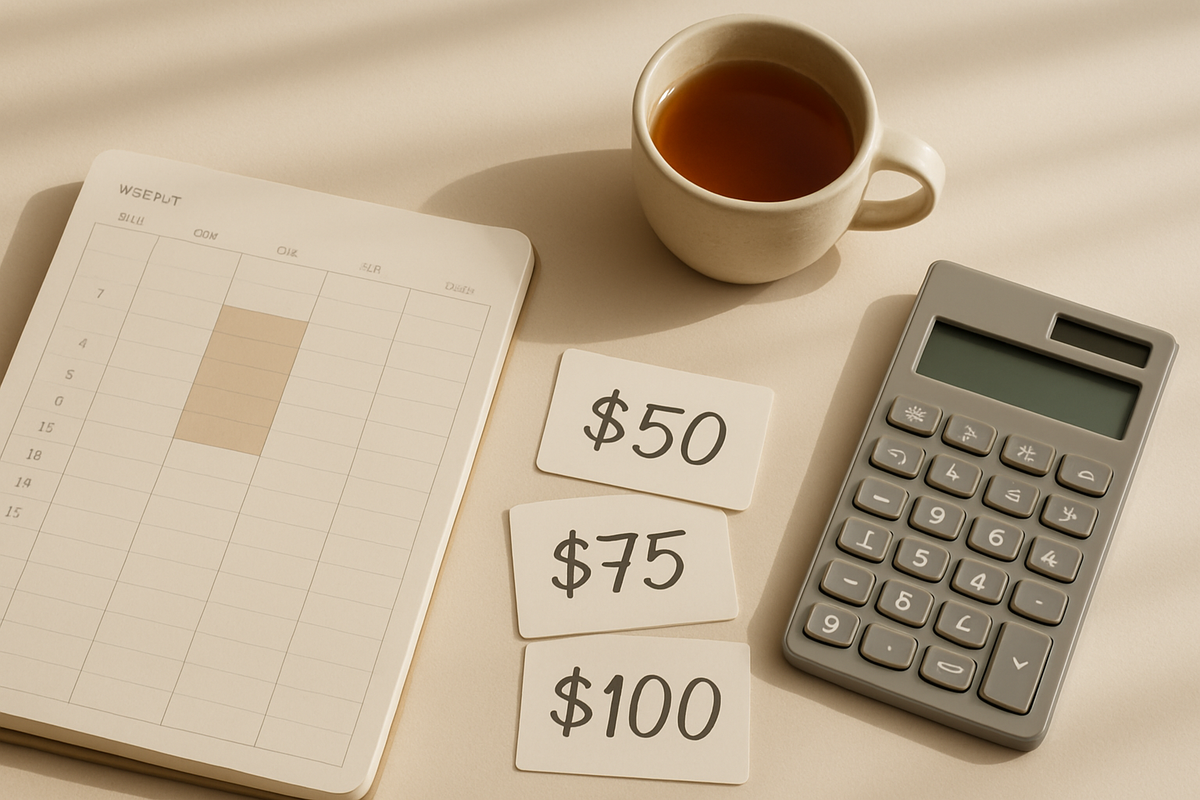
- The $75/hour floor reflects actual labor costs, as 60 minutes of teaching typically requires 2.5 hours of total work including planning, travel, setup, and documentation, making the real hourly rate closer to $30.
- Private sessions generate 3–5x higher revenue than group classes per teaching hour, with instructors earning $4,400/month teaching 10 hours of privates at $110/hour versus $1,400/month teaching the same hours of group classes at $35/hour.
- Multi-session packages stabilize income and reward client commitment, typically offering 5–15% discounts based on volume (5 sessions = 5% off, 10 sessions = 10% off, 20 sessions = 15% off).
- Specializations command premium rates, with RYT-500 certification and expertise in prenatal, therapeutic, or restorative yoga justifying prices at the higher end of market ranges, particularly in major metropolitan areas.
Why Private Session Pricing Confuses Instructors
Private yoga sessions consistently rank as the highest-margin revenue stream in the yoga industry, yet most instructors struggle to price them confidently. Unlike group classes, where national rates are well-established at $15–$30, private session pricing varies dramatically by location, delivery format, and instructor experience. This confusion often leads to systematic underpricing and lost income.
According to 2025–2026 national data, private yoga sessions average $125–$256 per session across all formats, but the range is wide. Many instructors charge far below what their expertise and actual labor justify, leaving thousands of dollars on the table annually.
Current National Benchmarks by Format
The three primary delivery formats each carry distinct pricing ranges based on 2026 market data. In-studio private sessions typically run $60–$120 per hour, reflecting the convenience of an established practice space with equipment already available. At-home sessions command $80–$150 per hour, accounting for instructor travel time, equipment hauling, and schedule flexibility required to reach clients.
Online private sessions generally price at $40–$100 per hour, roughly 15–30% lower than in-person formats due to eliminated travel time and facility costs. However, the expertise and personalized attention remain identical, so the discount should reflect only the reduced overhead, not diminished instructional value.
Regional Variation Matters
Location significantly impacts pricing floors and ceilings. New York City in-person private sessions cost $100–$150 per hour for certified instructors, with newer teachers at $80–$100 and well-established practitioners at $120–$150. Top-tier NYC instructors can command $200–$400 per hour.
By contrast, the U.S. average ranges from $70 to $95 per hour, with coastal markets consistently pricing higher than middle-country regions. Regional group class averages provide context: Southeast studios average $21 per class while Northeast metros average $26, according to Mariana Tek's 2025 benchmarks.
The Experience-Based Pricing Ladder
A systematic pricing framework tied to instructor experience provides clarity for both teachers and clients. Beginner instructors with 1–3 years of experience should charge $60–$80 per hour, establishing credibility while building their client base and refining teaching skills.
Intermediate instructors with 3–7 years of experience warrant $80–$120 per hour, reflecting proven teaching ability and deeper anatomical knowledge. Advanced instructors with 7+ years of experience or specialized certifications justify $120–$200+ per hour, particularly when holding RYT-500 certification or expertise in prenatal, therapeutic, or restorative yoga.
The Hidden Labor Behind Every Private Session
The most common pricing mistake stems from thinking about "teaching time" rather than total labor invested. As Sage Rountree explains, 60 minutes with a student rarely represents 60 minutes of work. After reviewing client notes, planning a personalized sequence, traveling to the location, setting up equipment, teaching, and documenting the session, instructors typically invest 2.5 hours of actual labor per one-hour session.
This reality makes $75 per hour the defensible floor for most U.S. markets. At $75 for one hour of teaching, the real hourly rate drops to approximately $30 when accounting for total labor time. Instructors charging below this threshold often earn less per hour than entry-level service jobs, despite requiring 200+ hours of certification training.
Independent Instructors Face Additional Costs
Instructors offering at-home sessions must factor travel time, fuel costs, parking fees, and equipment transport into their pricing. Studios offering in-home privates need to build these expenses into their rate structure, typically adding $10–$30 per session depending on distance and urban density.
The Revenue Math: Privates Versus Group Classes
The income difference between group and private instruction is dramatic. Teaching 10 hours per week of group classes at $35 per hour generates $1,400 monthly. Teaching the same 10 hours as private sessions at $110 per hour produces $4,400 monthly—a 214% increase with no additional time investment.
Editorial analysis, not reported fact: This differential explains why many full-time private yoga teachers earn $60,000–$100,000 annually while working fewer total hours than group class instructors. The business model shifts from volume-dependent revenue to value-based pricing, rewarding expertise and personalization rather than class size.
Semi-Private Sessions Offer a Middle Ground
Semi-private sessions with 2–4 students can be priced at 2–3x your group class rate per person, reflecting reduced individualized attention while maintaining schedule flexibility. Most instructors add $5–$15 per additional student beyond the first, creating accessible options for clients seeking personalized instruction at a lower price point than one-on-one sessions.
Package Structures That Stabilize Income
Multi-session packages encourage client commitment while smoothing instructor revenue across slower months. A common structure offers 5–15% discounts based on package size: 5 sessions receive a 5% discount, 10 sessions get 10% off, and 20 sessions earn 15% off the per-session rate.
For an instructor charging $100 per session, a 10-session package priced at $900 (10% discount) provides the client meaningful savings while guaranteeing the instructor $900 in committed revenue. This model reduces the feast-or-famine cycle many instructors experience and encourages consistent practice schedules that produce better client outcomes.
Specialization Premiums and Market Positioning
Specialized training justifies premium pricing beyond base experience levels. Prenatal and restorative yoga certifications often command higher rates due to specialized anatomical knowledge and liability considerations. Therapeutic yoga for injury recovery or chronic conditions requires advanced training that warrants rates at the top of experience-tier ranges.
RYT-500 certification signals advanced study and typically supports pricing $20–$40 higher per hour than RYT-200 certification at the same experience level. In major markets, these credentials become prerequisites for accessing corporate wellness contracts and high-end clientele.
Corporate Wellness Creates a Separate Revenue Tier
Corporate wellness sessions command $3,000–$6,000 for monthly contracts covering weekly sessions over 3–6 months. Local businesses commonly pay $100–$200 per on-site or virtual session for employee wellness programming, providing stable recurring revenue outside individual client relationships.
Calculating Your Personal Pricing Floor
Every instructor should calculate their minimum viable rate based on local cost of living, business overhead, and desired annual income. Start with your target annual salary, add business expenses (insurance, continuing education, marketing, equipment), and divide by your planned billable hours per year.
For example, an instructor targeting $60,000 annually with $10,000 in business expenses needs to generate $70,000. Teaching 15 billable hours per week for 48 weeks (accounting for vacation and slow periods) equals 720 annual hours, requiring a minimum rate of $97 per hour before taxes. This calculation clarifies why instructors charging $60–$75 per hour struggle to sustain full-time teaching careers.
What This Means for Studio Operators
Editorial analysis, not reported fact: Studios relying exclusively on group class revenue face significant vulnerability during seasonal slowdowns. One challenging month—January's resolution dropoff or summer travel season—can create immediate cash flow problems when group classes represent your only income stream.
Private sessions provide crucial revenue diversification with minimal facility overhead. A studio generating $8,000 monthly from group classes could add $3,000–$5,000 by dedicating just 10–15 instructor hours weekly to private sessions using existing space during off-peak hours. This revenue requires no additional marketing spend for most established studios, as current members represent the easiest conversion opportunity.
For independent instructors, the math is even more compelling. Transitioning from a schedule dominated by $35–$45 group classes to one centered on $100–$120 private sessions can double or triple annual income while reducing total teaching hours and physical wear. The challenge is not pricing justification—the market data supports these rates—but rather developing systems for client acquisition, scheduling efficiency, and session documentation that make private instruction sustainable at scale.
Sources & Further Reading
- Thumbtack 2025 national yoga pricing averages, comprehensive cost data across formats and locations
- Mariana Tek complete guide to yoga class pricing, regional benchmarks and pricing framework for studio operators
- Platsana 2026 pricing guide, format-specific rates and location-based analysis
- Sage Rountree on private yoga pricing, labor breakdown and pricing floor justification
- BookedIn experience-level pricing tiers, specialization premiums and certification impacts
- GymDesk income modeling for private sessions, corporate rates and revenue comparison
Editorial coverage of publicly reported industry developments. Yoga Studio Insider has no commercial relationship with any companies named.