ADA Compliance for Yoga Studios: Legal Requirements in 2026
Federal ADA lawsuits against fitness businesses jumped 27% in 2025. What yoga studio operators need to know about physical facility and website accessibility.
Key Takeaways
- Federal ADA lawsuits targeting fitness businesses jumped 27% in 2025, reaching 3,117 cases, with yoga studios facing exposure for both physical facility barriers and inaccessible online booking systems.
- Physical facility compliance focuses on five common violations: insufficient 60-inch turning radius in restrooms, doors narrower than 32 inches, inaccessible routes from parking, check-in counters exceeding 36 inches, and lack of accessible changing rooms (cost to add: $3,000–$8,000).
- Website accessibility has become a primary litigation target, with fitness businesses seeing a 28% increase in digital accessibility demand letters between 2023 and 2025; class booking widgets, membership forms, and videos without captions are the most common violations under WCAG 2.1 AA standards.
- Yoga Alliance's updated Code of Conduct released in February 2026 now explicitly references ADA compliance and directs members to "actively include" people with disabilities, not merely avoid discrimination.
- People with disabilities represent an untapped market for wellness businesses, with proactive accessibility investments creating competitive advantage beyond simple legal compliance.
Why Yoga Studios Face Heightened ADA Risk in 2026
The legal landscape for yoga studio operators shifted sharply over the past three years. Federal website accessibility lawsuits filed under Title III jumped 27% in 2025, reaching 3,117 cases, and the wellness sector absorbed a disproportionate share. Fitness and recreation businesses saw a 28% increase in ADA web accessibility demand letters between 2023 and 2025, a trend fueled by serial plaintiffs systematically targeting businesses with identifiable digital barriers.
Yoga studios occupy a particularly vulnerable position. Unlike large franchise gyms with legal departments and compliance protocols, independent studios typically lack the resources to conduct systematic accessibility audits. Yet as places of public accommodation under ADA Title III, yoga studios must make facilities accessible to people with disabilities to the extent readily achievable, creating legal exposure that many operators discover only when served with a demand letter.
The Dual Compliance Burden: Physical Facilities and Digital Platforms
Compliance obligations extend across two distinct domains, each with its own technical requirements and litigation patterns.
Physical Facility Requirements
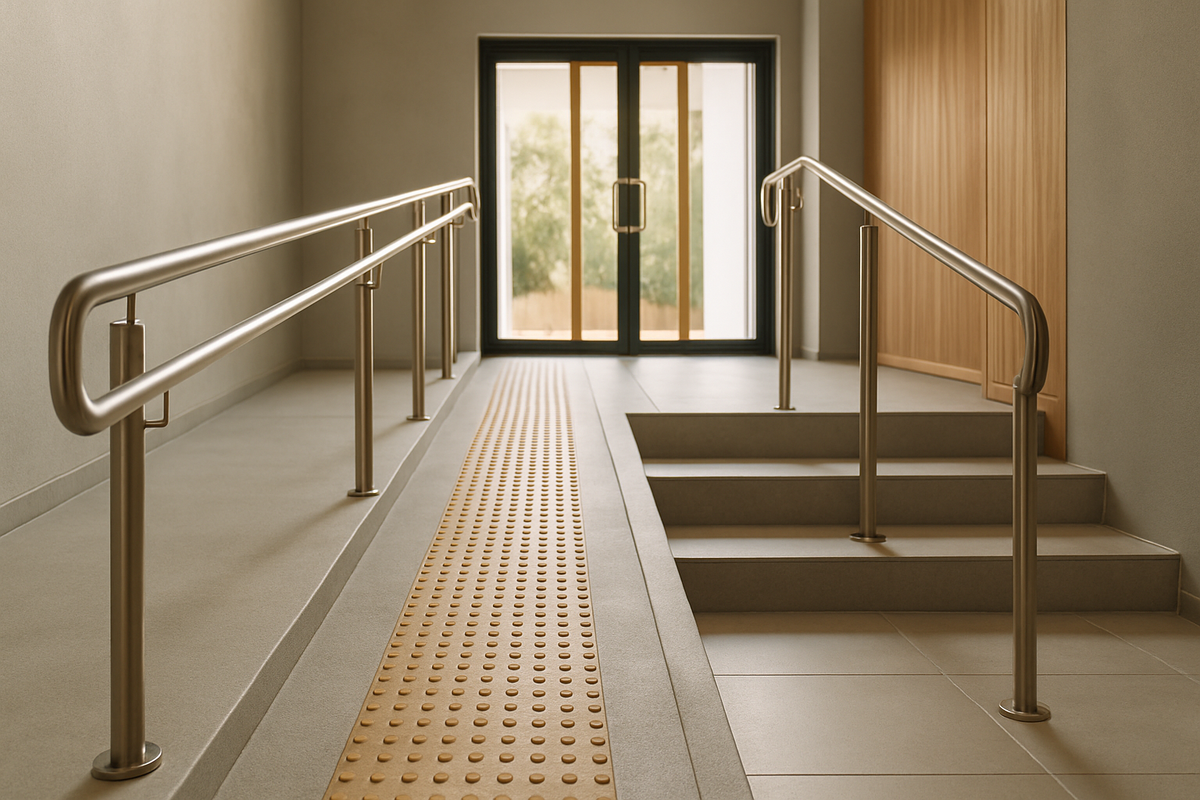
The most common ADA compliance issues for yoga studios include insufficient turning radius in restrooms (requires 60 inches), doors that are too narrow (minimum 32 inches clear width, 36 inches preferred), lack of an accessible route from the accessible parking space to the entrance, check-in counters that are too high (max 36 inches for the accessible portion), and inaccessible changing areas. The compliance standard varies by facility age and renovation history: new construction requires full accessibility, facilities undergoing renovation must meet current ADA Standards for altered portions, and existing facilities must remove architectural barriers where readily achievable—meaning without significant difficulty or expense.
Accessible changing areas represent a frequently overlooked compliance gap. A studio where able-bodied students change in one area but there is no accessible changing option may be non-compliant; the ADA requires that amenities available to the general public be accessible to individuals with disabilities. The solution need not be expensive: a simple private accessible changing room costs $3,000 to $8,000 depending on finishing level, and functions as both a compliance measure and a customer service upgrade.
Website and Digital Accessibility
Gyms and fitness centers are explicitly listed as places of public accommodation under ADA Title III, and online class schedules, membership signup flows, and personal trainer booking widgets must all be accessible under WCAG 2.1 AA standards. The most common violations include class booking widgets that cannot be operated by keyboard, membership forms with missing labels, and workout videos without captions—each creating a direct barrier to service for blind and motor-impaired users.
Digital accessibility litigation has grown more aggressive precisely because violations are easy to document and prove. Plaintiffs' attorneys can capture screen reader failures and keyboard navigation barriers through simple testing, then file demand letters against dozens of studios simultaneously.
Industry Standards and Yoga Alliance's Evolving Requirements
In February 2026, Yoga Alliance released an updated Code of Conduct that includes a reference to following the ADA and mandates members to "actively include" people from marginalized populations, not merely avoid discrimination. The updated Yoga Alliance Code of Conduct directs members to seek to actively include, accommodate, and welcome persons typically excluded and to understand and facilitate to the best of their ability reasonable accommodations for people with disabilities.
This policy shift reflects broader momentum within the accessible yoga community. Yoga Alliance is undertaking a teacher training Standards Review Project, and many within the accessible yoga community hope that Yoga Alliance will add the teaching of accessible yoga practice adaptations as a curriculum requirement for completing teacher training. Recommendations from an Inclusion Working Group propose that concepts of diversity, inclusion, accessibility, and equity should be interwoven throughout the RYS 200, 300, and 500 curricula.
What Reasonable Accommodations Look Like in Practice
Title III directs businesses to make reasonable modifications to their usual ways of doing things when serving people with disabilities, and requires that they take steps necessary to communicate effectively with customers with vision, hearing, and speech disabilities. For yoga instruction, this translates into concrete teaching adaptations.
Adaptive yoga specialists demonstrate how accessibility can function as instructional foundation rather than afterthought. Adaptive yoga is a way to make the practice of yoga more accessible to everyone, regardless of shape, mobility, or energy level. Organizations like Deaf North, one of few yoga studios in the Midwest exclusively dedicated to centering deaf, deaf-blind, and hard-of-hearing yogis, offer accessible virtual classes using American Sign Language, addressing how traditional verbal instruction can be exclusionary for these communities.
The Litigation Context: From Serial Plaintiffs to DOJ Enforcement
ADA enforcement comes from multiple directions. Serial plaintiffs systematically target businesses with website accessibility failures, parking non-compliance, or facility access barriers. State law creates additional exposure: California and New York maintain accessibility codes more stringent than federal law, and under California's Unruh Act and New York State Civil Rights Law, plaintiffs can obtain statutory damages without proving actual harm.
Federal agencies also pursue systemic cases. The Justice Department sued Fitness International LLC (LA Fitness), the largest chain of owner-operated gym and fitness clubs in the United States with nearly 700 locations across the country, for discriminating against people with disabilities at its gym and fitness clubs. While independent studios rarely face DOJ action, the case illustrates how accessibility violations create long-term legal exposure even for well-resourced operators.
The Business Case Beyond Compliance
People with disabilities are among the most overlooked audiences for gyms and fitness centers across the country, but they represent an untapped market with profit potential. Viewing accessibility solely through a compliance lens misses the market opportunity: approximately one in four U.S. adults lives with a disability, and wellness businesses that proactively accommodate this population gain competitive differentiation.
Accessible design benefits all users. Wider doorways accommodate strollers and equipment carts. Captioned videos help students in noisy environments. Clear signage and intuitive wayfinding reduce confusion for everyone. Studios that build accessibility into operations from the start avoid the higher costs of reactive retrofitting while capturing an underserved customer segment.
Immediate Action Steps for Studio Operators
Systematic compliance requires addressing both physical and digital touchpoints:
Physical Facility Audit
- Measure restroom turning radius (60 inches required)
- Verify door clear width (32-inch minimum, 36-inch preferred)
- Confirm accessible route from parking to entrance with no steps or barriers
- Lower check-in counter portion to 36 inches maximum
- Evaluate changing area accessibility and budget for private accessible room if needed
Digital Accessibility Review
- Test class booking system with keyboard-only navigation
- Run automated accessibility checker on website (WAVE or similar tool)
- Verify all form fields have proper labels for screen readers
- Add captions to video content
- Review color contrast ratios for text readability
Instructional Practice
- Train instructors on verbal cueing that doesn't rely on visual demonstration alone
- Offer modifications for common poses as standard practice, not special accommodation
- Ask about accessibility needs during registration, not at class entry
- Develop relationships with adaptive yoga specialists for consultation
What This Means for Studio Operators
Editorial analysis, not reported fact:
The convergence of rising litigation, professional association standards updates, and demographic opportunity creates a pivotal moment for studio operators. Studios that treat accessibility as purely defensive compliance miss the strategic value of inclusive design. The operators best positioned for long-term success will integrate accessibility into brand identity, not bolt it on as legal afterthought.
For small studios operating on thin margins, the compliance burden feels overwhelming. But the investments need not be simultaneous or expensive. A phased approach—starting with the highest-risk violations like parking access and website booking systems, then addressing facility modifications during planned renovations—spreads costs while demonstrating good-faith effort that courts consider when evaluating "readily achievable" standards.
The teacher training curriculum changes being considered by Yoga Alliance signal that accessibility literacy will become baseline professional competency, not specialized expertise. Studios that begin building instructor capacity now will have competitive advantage as these standards formalize, while studios that wait face both compliance catch-up and market disadvantage.
Sources & Further Reading
- Level Access analysis of Title III website accessibility lawsuits, covering 2025 litigation trends
- WCAG Safe guide to ADA compliance for gyms and fitness centers, technical requirements for digital accessibility
- Nexofit overview of ADA standards for fitness facilities, physical compliance requirements
- Department of Justice press release on LA Fitness lawsuit, federal enforcement precedent
- Yoga U Online coverage of Yoga Alliance Code of Conduct updates, February 2026 policy changes
- Yoga Alliance Code of Conduct, official member requirements
- Yoga Alliance Standards Review Project inclusion recommendations, curriculum reform proposals
- MSP Magazine profile of Deaf North yoga studio, accessible instruction case study
Editorial coverage of publicly reported industry developments. Yoga Studio Insider has no commercial relationship with any companies named.