Yoga + Strength Fusion: Why Studios Are Adding Weights in 2026
Major US yoga chains now offer hybrid strength classes. Learn why functional movement, instructor credentialing, and longevity programming are reshaping studio business models.
Key Takeaways
- Hybrid yoga + strength classes are now standard programming at major US chains including YogaSix, Highland Yoga, and CorePlus, reflecting market consolidation around fusion formats as studios compete with gyms offering yoga.
- Functional movement patterns (squatting, hinging, carrying, pulling) do not appear consistently in traditional yoga sequences, creating demand for classes that blend weights, resistance training, and mobility work in a single session.
- Instructor credentialing gaps present a challenge: most RYT-200 instructors lack exercise science or ACE fitness credentials needed to safely program progressive overload and strength work, forcing studios to hire dual-credentialed teachers or upskill existing staff.
- The Silver Economy demographic (adults 65+) drives longevity-focused programming combining balance, fall prevention, bone density work, and cognitive benefits in hybrid formats tailored to aging bodies.
- Revenue models are shifting toward personalized hybrid offerings that bundle in-person strength-yoga fusion with digital subscriptions, addressing high operating expenses and intense competition in the boutique studio market.
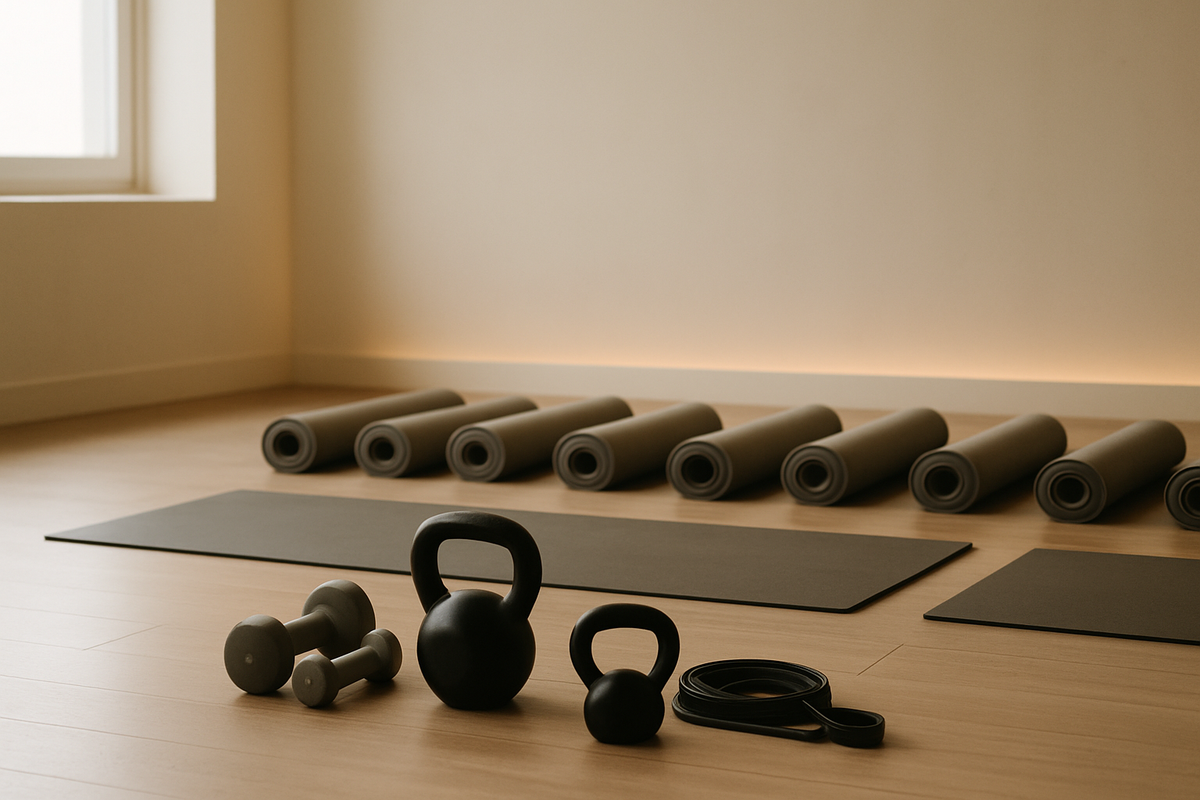
- Joint-friendly, metabolic strength training using resistance bands, light dumbbells, and bodyweight progressions is replacing heavy lifting in studio contexts, aligning with research on metabolic health and functional independence across the lifespan.
Why Studios Are Adding Weights to Yoga Programming in 2026
Yoga and Pilates studios across the US are integrating strength-focused class variants into their core schedules, marking a significant shift in how studios position themselves against hybrid gyms. This programming evolution addresses two urgent challenges: competing with fitness chains that now offer yoga classes, and capturing the "all-in-one" membership segment seeking both mindfulness and muscle-building in a single location.
According to a 2025 fitness trends analysis by Clubworx, the fitness landscape is undergoing a major shift toward hybrid workouts that blend yoga, strength training, and cardio. Research on boutique studio trends shows women in particular are moving away from weight-loss-focused training toward building functional strength and muscle.
The boutique fitness market analysis confirms that specialized programs emphasizing functional training, HIIT, and strength work offer intimate, community-driven environments that differentiate studios from big-box gyms. Studios that integrate these elements smartly maintain their yoga-centric brand identity while meeting evolving demand.
Real-World Class Formats: What Fusion Programming Looks Like
Major chains have already embedded strength training into their class rosters, signaling that hybrid formats are no longer experimental. YogaSix's Y6 Power classes are marketed as strength-building, full-body sessions designed to build focus, endurance, and flexibility in heated rooms, while their Y6 Sculpt & Flow classes blend yoga and weight training in warm practice spaces.
Highland Yoga offers Hot Power Yoga, Yoga Sculpt, and HY Burn (Weight Training + Yoga Stretching) as distinct offerings. The Works' Fusion classes mix yoga, weights, and resistance training into integrated sessions. These naming conventions reflect studios' efforts to differentiate hybrid formats while clearly communicating strength components to prospective students.
CorePlus, featured in a 2026 boutique fitness trends report, combines reformer Pilates, mat Pilates, yoga, and heated classes under one roof with 11 unique class styles, and now operates in 30+ locations globally including its first US studio in Arizona. VASA is investing $30 million into existing clubs, expanding offerings like STUDIO LFT strength training and STUDIO FLOW infrared yoga while adding equipment from Arsenal, Hammer Strength, and Rogers.
The Functional Movement Gap in Traditional Yoga Sequences
A key driver behind fusion programming is a growing recognition that traditional yoga asana sequences do not consistently train everyday movement patterns. According to yoga educator Jenni Rawlings' analysis, functional movement patterns like squatting, pulling, carrying, and hinging do not show up reliably in most traditional yoga classes. When students say "I just want to move and feel better in my life," these fundamental patterns matter for daily function.
Body Mind Fitness explains that blending light weights into yoga allows simultaneous training of strength, mobility, balance, and coordination. Power Living notes that functional movement has held strong for over 10 years in global fitness trends and is slowly making its way onto the yoga mat.
Industry growth strategies for 2026 recommend creating workshops or class series dedicated to functional movement, using yoga to improve everyday mobility and overall physical performance. This approach positions studios as longevity-focused rather than simply flexibility-focused.
Instructor Credentialing: The Dual-Certification Challenge
The shift to strength-integrated programming exposes a significant credential gap. Most traditional yoga teachers holding RYT-200 certifications lack the exercise science or fitness industry credentials needed to safely prescribe weights, progressive overload, or periodized strength programming.
YOGABODY Coach Certification addresses this by combining Yoga Alliance 200-hour credentials with ACE Certified Trainer and International Coaching Federation (ICF) pathways, qualifying graduates as Certified Functional Strength Instructors who can lead one-on-one coaching, group strength classes, and hybrid formats like Yin-Yang Flow (a blend of dynamic yoga, functional strength, and stretching).
The International Sports Sciences Association (ISSA) similarly combines sports training science with Yoga Alliance credentials, aiming to add value to traditional practice by fusing biomechanics and exercise science principles. Studios face a choice: hire instructors who already hold dual credentials, or invest in upskilling existing teachers through programs like these.
Longevity Programming and the Silver Economy Opportunity
Hybrid yoga and strength programming aligns particularly well with aging demographics seeking functional fitness. 2026 trends emphasize inclusivity and adaptive yoga for seniors, noting the Silver Economy (adults 65+) represents one of the wealthiest demographics and needs support with balance, fall prevention, and cognitive function. Yoga addresses all three, and when combined with social connection and strength work, becomes highly effective for older adults.
Consumer testimonials from a 65-year-old student describe hybrid classes as "killing several birds with one stone," delivering weights, balance, and flexibility in one fun session. Research shows that regular strength training improves metabolic health, bone density, and functional independence across the lifespan, making longevity-focused programming both clinically sound and commercially viable.
The programming shift favors joint-friendly, metabolic strength work using resistance bands, light dumbbells, and bodyweight progressions rather than heavy barbell lifts, aligning with older adults' needs while remaining accessible to mixed-age classes.
Revenue Model Implications: Hybrid Membership Bundles
Market analysis of Pilates and yoga studios notes that personalized fitness regimens, hybrid class models, and eco-friendly studio trends are propelling steady growth despite intense competition and high operating expenses. The boutique fitness industry is shifting toward hybrid revenue models that blend in-person training with digital subscriptions.
Studios offering fusion programming can justify higher monthly membership fees by positioning themselves as comprehensive fitness destinations, reducing member churn to supplemental gym memberships. The all-in-one value proposition directly addresses price sensitivity by eliminating the need for separate yoga and strength training memberships.
The Authenticity Debate: Functional Yoga vs. Yoga Tradition
Some systems are now labeled "functional yoga" or described as yoga with functional movement included. According to movement educator analysis, this labeling emerged partly in response to yoga being characterized as "non-functional," prompting creation of new systems or versions of yoga that claim to be more functional.
This reflects an ongoing tension in the yoga community between lineage preservation and market-driven adaptation. Studios must navigate brand positioning carefully, framing strength integration as complementary to traditional practice rather than a replacement or correction.
What This Means for Studio Owners
Editorial analysis — not reported fact:
If your studio has not yet piloted a yoga-strength fusion class, Q3 2026 is the time to test one. The evidence suggests this is not a passing trend but a structural market shift driven by member demand for functional, longevity-focused training and competitive pressure from hybrid gyms. Start with a single weekly Sculpt & Flow or Functional Yoga slot using light dumbbells (3-8 lbs) and resistance bands, taught by your most experienced instructor.
The instructor credentialing gap is your biggest operational risk. Do not assign strength-hybrid classes to teachers without fitness industry credentials or foundational knowledge of progressive overload, joint contraindications, and load management. Budget for either hiring a dual-credentialed instructor (RYT-200 + ACE or NASM certification) or sending an existing teacher through a program like YOGABODY Coach Certification or ISSA's hybrid pathway. Liability exposure increases significantly when weights enter the room.
Position fusion classes as longevity and functional fitness offerings, not body-shaping or weight-loss programs. This framing aligns with the documented shift in consumer motivation (especially among women) toward strength and capability rather than aesthetics, and it opens your studio to the high-value Silver Economy demographic seeking fall prevention, bone density, and independence.
Consider bundling fusion programming with digital on-demand content to justify premium membership tiers. Members who see your studio as their sole fitness destination are far less likely to churn than those splitting time between your yoga classes and a separate gym membership for strength work.
Sources & Further Reading
- Clubworx: 10 of the Biggest Fitness Trends — Overview of hybrid workout adoption and strength training benefits for metabolic health and bone density
- YogaSix Class Offerings — Examples of Y6 Power and Y6 Sculpt & Flow hybrid class formats at a major US yoga chain
- Highland Yoga — Studio offering Hot Power Yoga, Yoga Sculpt, and HY Burn (Weight Training + Yoga Stretching)
- The Works: Yoga Meets Strength — Description of Fusion classes blending yoga, weights, and resistance training
- Mariana Tek: 6 Trendsetting Boutique Fitness Studios to Watch in 2026 — Coverage of CorePlus and VASA investments in hybrid programming
- Jenni Rawlings: Is Yoga Functional or Non-Functional Movement? — Analysis of functional movement patterns and their presence (or absence) in traditional yoga
- Body Mind Fitness: Yoga with Weights — Explanation of blending light weights for simultaneous strength, mobility, balance, and coordination training
- Power Living: All You Need to Know About Functional Yoga — History of functional movement in fitness trends and its integration onto the yoga mat
- YOGABODY Coach Certification — Dual-credential program combining Yoga Alliance 200hr, ACE Certified Trainer, and ICF Coach pathways
- Flow Hood River: Top Fitness, Yoga, and Longevity Trends for 2026 — Coverage of inclusivity, adaptive yoga for seniors, and Silver Economy demographics
- Glofox: Yoga Trends — Shift in consumer motivation toward functional strength and 2026 growth strategies for studios
- Allied Market Research: Pilates and Yoga Studios Market — Analysis of personalized regimens, hybrid models, and revenue implications
- InsightAce Analytic: Boutique Fitness Market — Boutique studio focus on specialized programs and hybrid revenue models blending in-person and digital offerings
Editorial coverage of publicly reported industry developments. Yoga Studio Insider has no commercial relationship with any companies named.