The Studio Design Revolution: Immersive Environments in 2026
High-end yoga studios deploy 360-degree projection, spatial audio, and sustainability to justify premium pricing as the market climbs toward $2.7 billion.
Key Takeaways
- Immersive studio design is justifying premium pricing: High-end yoga studios now deploy 360-degree projection mapping, spatial audio, and nature-inspired visuals to create offline, sensory-focused experiences that differentiate in-person attendance from hybrid offerings.
- The yoga franchise market is projected to reach $2.7 billion in 2026, up from current levels, with forecasts climbing to $5.65 billion by 2035 as major franchises like CorePower, YogaSix, and Yoga Joint scale aggressively across suburban and premium markets.
- Sustainability credentials now function as competitive differentiators, with studios investing in bamboo flooring, recycled materials, high-quality air purification, and ESG-aligned "Green Studio" design to attract values-conscious practitioners.
- Class attendance has climbed close to pre-COVID levels and is projected to surpass 2019 numbers, while average class prices have increased roughly 6% year-over-year, signaling renewed consumer confidence in studio experiences.
- Boutique studios remain hyper-local and fragmented, with no single operator holding more than 5% market share according to MMCG research, creating ongoing opportunities for independent studios that deliver distinct, community-centric offerings.
- Technology is enhancing how yoga feels, not digitizing the practice: Studios use tech to elevate ambiance and retention through curated lighting, sound control, and AI-driven member insights rather than replacing in-person instruction.
Why Design-Forward Studios Are Winning the Premium Market in 2026
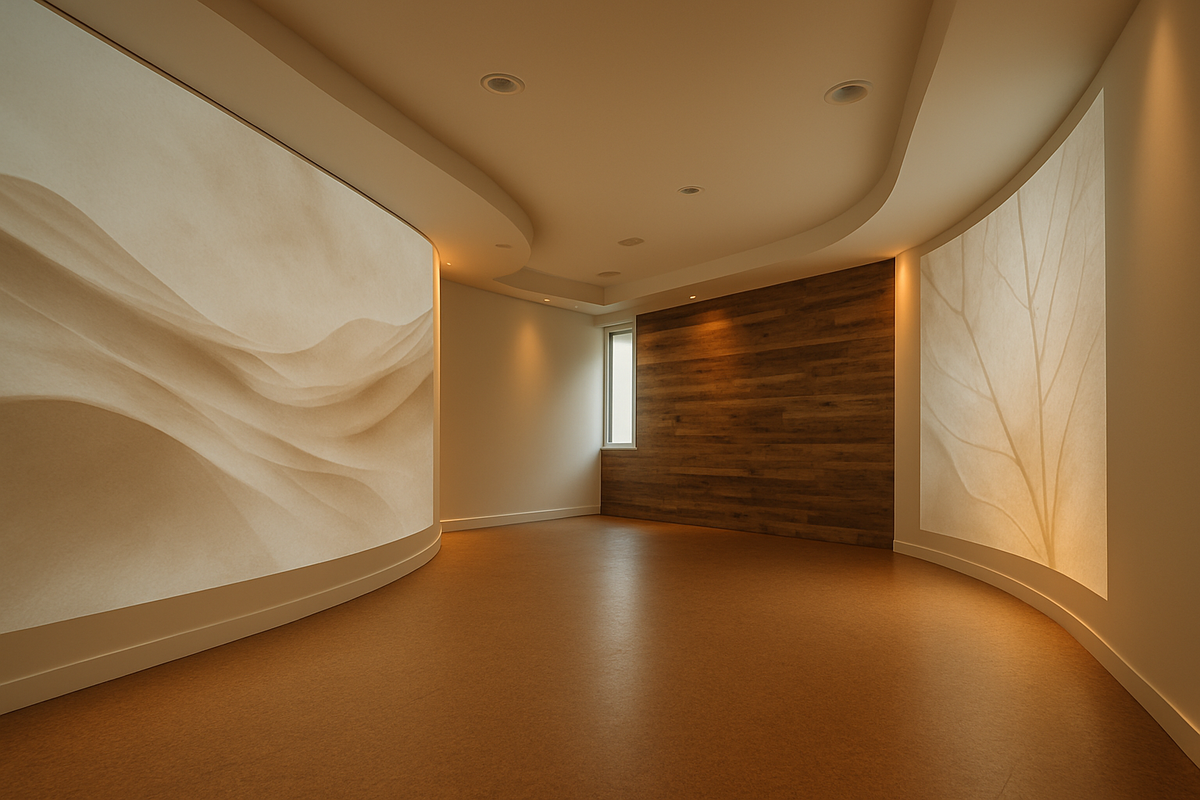
As class attendance approaches and is expected to exceed 2019 benchmarks this year, studio operators face a defining question: what justifies in-person pricing when on-demand platforms remain ubiquitous? The answer emerging across high-growth franchises like CorePower Yoga and boutique brands alike is immersive environmental design. Studios are deploying 360-degree projection mapping, spatial audio, and nature-inspired visuals to create sensory experiences that feel restorative, intentionally offline, and impossible to replicate at home.
This pivot represents a sharp departure from the hybrid models that dominated 2020 through 2024. Modern studios are investing in durable non-toxic flooring, high-quality air purification, dimmable lighting, and precise temperature regulation to support comfort and focus across heated, restorative, and power class formats. The goal is to make every visit feel like a fully embodied retreat rather than a transactional workout slot.
The economics are compelling: average class prices have increased roughly 6% year-over-year, and the broader yoga franchise market is forecast to reach $2.7 billion in 2026 before climbing to $5.65 billion by 2035. Operators who can demonstrate clear sensory and community value are capturing disproportionate share of that growth.
Franchise Expansion and the Battle for Suburban Premium Markets
CorePower Yoga, with over 220 locations nationwide, continues its aggressive suburban expansion. The company is opening two new Long Island studios in late summer and year-end 2026, targeting Roslyn and Garden City respectively. These additions reflect confidence in suburban yoga demand and the franchise's ability to blend traditional yoga with strength, sculpt, and cardio elements in hybrid formats like Yoga Sculpt and CorePower StrengthX.
Meanwhile, Yoga Joint has raised $12 million through community crowdfunding, a financing model that bypasses traditional venture capital and signals deep local support. The Florida-based chain currently operates 14 locations with plans to reach 20 by Q1 2026. YogaSix demonstrates strong top-line performance with an Average Unit Volume of $468,000 and a 33.3% revenue increase as of early 2025, though FitnessNav VERIFY™ methodology flags a "weak" payback ratio of 1.45x due to initial investment requirements ranging from $529,000 to $826,000.
Australian import CorePlus has entered the U.S. market with its first Arizona studio, offering 11 class styles that combine reformer Pilates, mat Pilates, yoga, and heated classes under one roof. The brand operates 30+ locations globally and emphasizes inclusive movement and state-of-the-art studio design.
Sustainability as a Revenue Driver, Not Just Values Signaling
In 2026, sustainability credentials function as concrete competitive differentiators rather than abstract mission statements. Studios are investing in bamboo flooring, linoleum, natural stone, and recycled materials during initial buildouts, recognizing that practitioners increasingly evaluate spaces through environmental and wellness lenses simultaneously. High-quality air purification and ventilation systems are now baseline expectations, particularly for heated formats where air quality directly impacts comfort and perceived safety.
Modo Yoga's "Green Studio" design framework and ESG principles have become a template for independent studios seeking to signal values alignment without franchise backing. Practitioners want to experience the ambiance of nature inside the studio, which translates to demand for natural light, living plants, and materials that feel tactile and organic rather than clinical or gym-like.
This trend intersects with the broader shift toward experience-driven differentiation: in a market where vinyasa flows can blur together, environmental design becomes a primary tool for brand distinction and premium pricing justification.
The Boutique Advantage: Hyper-Local Positioning in a Fragmented Market
Despite franchise expansion, MMCG research identifies no single yoga or Pilates operator with more than 5% market share, leaving the studio business hyper-local and fragmented compared to big-box gym consolidation. This creates ongoing opportunities for independent studios that deliver distinct, community-centric offerings tailored to neighborhood demographics and practitioner preferences.
Reforming Pilates operates as one of the most wait-listed boutique studios in South Florida, offering daily group and private classes rooted in classical Pilates principles across locations from Miami Beach to Boca Raton and New York. Yoga Hive in San Francisco has integrated a café and bookstore, hosting events from book clubs to nutrition workshops that foster belonging and support beyond the mat.
The strategic advantage for boutiques lies in developing signature class styles (fusion formats, live music integration), focusing on specific clientele (athletes, seniors, prenatal populations), or integrating broader wellness modalities like meditation, breathwork, and sound healing. In 2026, being "just another studio" is a recipe for obscurity in a market where differentiation drives both retention and word-of-mouth acquisition.
Market Volatility and the Cautionary Tale of Lease Cycle Compression
Orangetheory is closing studios faster than at any point since the pandemic, with 18 confirmed U.S. closures and one international exit between August 2025 and May 2026. The driver is lease cycle compression: Orangetheory's peak expansion years ran from 2014 through 2017, and standard ten-year commercial leases signed during that window are now coming up for renewal in markets where rent has compounded well above inflation.
This dynamic is not unique to Orangetheory. Any studio that signed leases during the 2014 to 2017 fitness boom now faces materially higher occupancy costs at renewal, often in neighborhoods where class pricing has not kept pace with rent inflation. Operators evaluating new locations in 2026 must model lease escalations, neighborhood rent trajectories, and realistic per-class revenue ceilings before committing to long-term real estate.
What This Means for Studio Owners
Editorial analysis — not reported fact:
If you are planning a new studio or contemplating a lease renewal, the data suggests three strategic imperatives. First, environmental design is no longer optional for premium positioning. Investing in immersive lighting, air quality, natural materials, and spatial audio during the buildout phase creates differentiation that justifies higher per-class pricing and supports retention in a market where practitioners have abundant hybrid and on-demand alternatives.
Second, sustainability investments should be treated as revenue drivers, not cost centers. Practitioners are evaluating studios through integrated wellness and environmental lenses, and studios that signal ESG alignment through tangible design choices (bamboo flooring, living plants, recycled materials) are capturing values-conscious market segments willing to pay premium rates.
Third, lease economics demand rigorous modeling. The Orangetheory closures are a leading indicator: studios that signed ten-year leases during the 2014 to 2017 boom are now confronting renewal terms that may no longer pencil against realistic class revenue. Before committing to new real estate, model neighborhood rent trajectories, competitive class pricing, and realistic attendance curves over the full lease term. In a fragmented market with no dominant consolidators, your competitive advantage lies in hyper-local positioning, distinct programming, and financial discipline around occupancy costs.
Sources & Further Reading
- CorePower Yoga franchise overview and expansion details — covers nationwide footprint, suburban growth strategy, and hybrid class formats
- IBISWorld yoga and Pilates studio industry market research — includes market size projections, attendance trends, and average class price increases through 2026
- Yoga Joint franchise profile and crowdfunding model — details community-backed $12 million raise and Florida expansion plans
- YogaSix franchise financials and technology integration — covers Average Unit Volume, revenue growth, payback ratios, and AI-driven member retention tools
- MMCG market share analysis of boutique fitness consolidation — documents fragmentation and lack of dominant players in yoga/Pilates studio sector
- CorePlus U.S. market entry and class format overview — describes Australian expansion, Arizona location, and hybrid Pilates-yoga offerings
- Reforming Pilates boutique studio model — highlights wait-list demand, classical Pilates focus, and multi-location growth in Florida and New York
- Orangetheory studio closure trends and lease cycle analysis — documents 18 U.S. closures between August 2025 and May 2026 and lease renewal challenges
Editorial coverage of publicly reported industry developments. Yoga Studio Insider has no commercial relationship with any companies named.