The 2026 Yoga Teacher Training Tipping Point: RYT Saturation
RYT 200 certification no longer guarantees income. In 2026, specialty credentials and online scaling drive sustainable teaching careers, not foundational certifications alone.

Key Takeaways
- RYT 200 saturation is real: The foundational 200-hour certification no longer guarantees viable income; most US studio teachers earn $30–$75 per class and require 8–12 classes weekly to reach $1,500–$3,000 monthly before expenses.
- Online certifications now carry equal credentials: Online yoga teacher training earns the same Yoga Alliance RYT 200 as residential programs, with most studios accepting online certification when supported by teaching experience, though Yoga Alliance requires at least 15% of training hours be synchronous and live as of 2024.
- Specialty niches command premium opportunities: Registered Children's Yoga Teacher and Registered Prenatal Yoga Teacher certifications open doors in healthcare, schools, and corporate wellness that general certifications cannot reach, addressing genuine market demand in 2026.
- Program costs range $1,500–$5,000+ in 2026: US residential 200-hour programs typically cost $2,000–$5,000, while legitimate online programs run $2,500–$4,500; payment plan adoption is high, with 616 payment options available across platforms at a median $83 monthly installment.
- Income growth lives in online and niche teaching: Teachers building scaled online group practices and niche memberships report earning $10,000+ monthly, significantly outpacing traditional studio teaching rates, though this requires business education most 200-hour trainings omit.
- Maintenance costs add up: Yoga Alliance requires 30 continuing education hours every three years plus annual membership fees; liability insurance runs $120–$400 annually for independent instructors.
Why 200-Hour RYT Certification No Longer Guarantees Income
The yoga teaching market in 2026 faces a paradox: there is no shortage of certified teachers, but there is a genuine shortage of teachers who can build sustainable practices. The foundational 200-hour Registered Yoga Teacher designation from Yoga Alliance remains the entry point for professional teaching, covering asanas, pranayama, meditation, anatomy, philosophy, and teaching methodology.
However, market saturation has fundamentally altered income expectations. According to industry compensation data, studio teaching in most US markets pays $30–$75 per class. Teachers building to 8–12 classes weekly gross $1,500–$3,000 monthly before expenses, which does not constitute a living wage without additional income streams. The certification itself no longer differentiates teachers in competitive urban markets.
The RYT 300 and RYT 500 designations represent advanced training paths. RYT 300 requires 300 hours of advanced work from a Yoga Alliance registered school, building on foundational knowledge with deeper philosophy and coaching methodology. RYT 500 certification signifies 500 total training hours and covers advanced asanas, sequencing, adjustments, and specialized areas including prenatal yoga, trauma-informed yoga, or yoga therapy.
Online Training Legitimacy and the 2024 Standards Shift
Online yoga teacher training now earns the same Yoga Alliance RYT 200 certification as residential programs. On paper, the credentials are identical. In practice, market perception has shifted considerably since 2024, when Yoga Alliance implemented new requirements mandating at least 15% of training hours be synchronous and live for online-registered programs. Self-paced recorded content alone no longer meets accreditation standards.
Most legitimate 200-hour online programs in 2026 cost between $2,500 and $4,500, according to current program surveys. The majority of studios now accept online yoga teacher certification, especially when candidates demonstrate teaching experience. Thousands of certified teachers working in studios, gyms, and online platforms today trained entirely online.
However, fully residential immersive programs deliver one thing online formats struggle to replicate: embodied teaching competency developed over 21 consecutive days of living, eating, and practicing with the same cohort. This lived experience often translates to stronger classroom presence and adjustment skills in early teaching careers.
The Real Cost of Certification in 2026
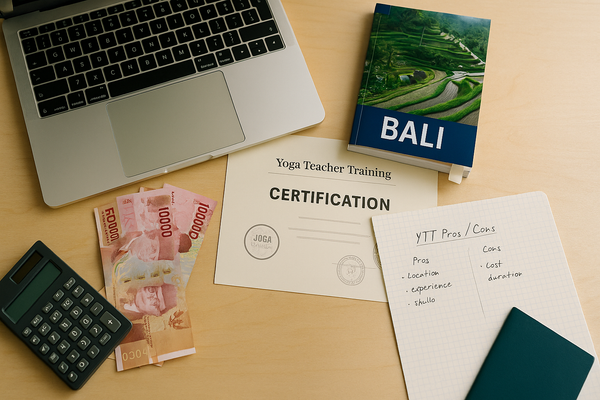
A 200-hour residential program in the US typically ranges from $2,000 to $5,000 in 2026, according to current market data. Programs in India or Bali for the same certification often run $1,500–$3,000 inclusive of accommodation and meals. Schools set their own tuition based on program length, location, and format.
Payment flexibility has become standard across the industry. Analysis of 616 payment plan options across yoga course platforms shows a median installment of $83 monthly. This high adoption rate suggests yoga students value financial flexibility and that training providers have learned payment plans significantly increase enrollment for higher-priced programs.
Hidden ongoing costs include maintenance requirements: Yoga Alliance mandates 30 continuing education hours every three years plus annual membership fees. Liability insurance runs $120 to $400 annually for independent instructors, though some studios cover their employed teachers.
Where Income Growth Actually Lives: Specialty Certifications and Niche Markets
The 2026 income opportunity has migrated away from generalist studio teaching toward two distinct paths: specialized populations and scaled online delivery. Registered Children's Yoga Teacher and Registered Prenatal Yoga Teacher certifications address specific training needs, focusing respectively on child development and creative movement, and on prenatal anatomy and breathwork for pregnancy and postpartum.
These specialty credentials open doors in healthcare settings, schools, and corporate wellness programs that general yoga certifications cannot reach. According to recent industry demand reports, hospitals, schools, corporate offices, and online platforms are actively seeking qualified teachers with specialty training. A dedicated pranayama training, for example, creates opportunities in stress management and therapeutic settings distinct from general yoga instruction.
The highest income potential in 2026 lies in scaled online group practices. Teachers building niche memberships and Zoom-based group programs report earning $10,000 or more monthly, according to instructor income surveys. This significantly outpaces traditional studio rates but requires business education most 200-hour trainings omit. Building this income takes time, student trust, and consistent work rather than immediate returns after certification.
Program Quality Signals and Completion Data
Pricing patterns reveal market positioning. According to analysis of yoga course pricing structures, the higher-price cluster above $501 is dominated by 200-hour and 500-hour yoga teacher training programs, which command premium prices because of their certification value and comprehensive scope.
Program structure significantly impacts completion rates. Cohort-based scheduled yoga courses achieve a median 69.2% completion rate, compared to 57.8% for open access and 44.9% for on-demand courses. This data suggests that synchronous elements and scheduled accountability improve both learning outcomes and credential completion, supporting Yoga Alliance's 2024 shift toward live instruction requirements.
What This Means for Studio Owners
Editorial analysis — not reported fact:
If you are hiring teachers in 2026, the RYT 200 credential alone tells you almost nothing about teaching competency or business maturity. You need to assess hands-on teaching experience, specialty training relevant to your student demographics, and whether candidates understand the economics of building a sustainable teaching practice. Teachers who have invested in specialty certifications such as prenatal or children's yoga bring differentiated value that justifies premium class offerings and can attract underserved market segments to your studio.
If you are considering adding teacher training to your studio revenue mix, understand that the 200-hour market is saturated and price-competitive. Your competitive advantage lies either in residential immersive experiences that justify premium pricing, or in specialized advanced training that addresses genuine skill gaps in your regional market. Payment plans are now table stakes; 616 programs offer them, and the $83 monthly median suggests students expect affordability structures as standard.
For studio owners who are themselves certified teachers, the income data should inform your own career diversification. Relying solely on per-class studio rates caps monthly income at $1,500–$3,000 for full teaching schedules. Building an online component or developing a paid specialty workshop series creates income streams with higher ceilings and less direct time-for-money exchange.
Sources & Further Reading
- Yoga Alliance RYT certification standards and requirements — official registry for yoga teacher credentials and continuing education mandates
- Yoga Journal industry compensation and program cost surveys — covers teacher income ranges, training costs, and market demand trends
- Ruzuku yoga course pricing and completion rate analysis — data on payment plan adoption, pricing clusters, and cohort-based program outcomes
Editorial coverage of publicly reported industry developments. Yoga Studio Insider has no commercial relationship with any companies named.