Tax Deductions Yoga Teachers and Studio Owners Often Miss
From liability insurance to Section 179 equipment write-offs, yoga professionals commonly overlook thousands in legitimate deductions each tax season.

Key Takeaways
- Liability insurance premiums are fully deductible as ordinary and necessary business expenses, yet many newly certified teachers overlook this write-off despite carrying coverage.
- Music subscriptions require commercial licenses to be deductible. Personal Spotify or Apple Music accounts cannot be written off as business expenses because they're licensed for personal use only.
- Section 179 equipment deductions allow studio owners to deduct up to $2.5 million in qualifying equipment purchases in the year of acquisition, making it ideal for reformers, flooring, and other capital investments.
- Home office deductions require exclusive business use of the space. The simplified method allows $5 per square foot up to $1,500 maximum deduction, but mixed-use spaces like bedroom corners don't qualify.
- Mileage between teaching locations is deductible at 70 cents per mile for 2025, but commuting from home to your primary studio is not.
- Contract labor expenses for photographers, graphic designers, and substitute teachers are fully deductible, yet studio owners frequently forget to track these payments.
Why Yoga Professionals Leave Money on the Table
As the 2026 tax season opens, yoga instructors and studio operators face a familiar challenge: identifying which expenses qualify as legitimate business deductions. According to boutique fitness accounting experts, most studio owners leave money on the table simply because they don't know what counts as deductible under IRS guidelines.
The stakes extend beyond just lowering taxable income. Because yoga teachers typically operate as independent contractors, maximizing deductions reduces self-employment tax liability, which covers both Social Security and Medicare contributions. Anyone earning over $400 in self-employment income must file a tax return and may need to pay quarterly estimated taxes throughout the year.
The Insurance Blind Spot
Yoga liability insurance is an expense often overlooked, especially by newly minted teachers who may not realize these premiums qualify as ordinary and necessary business expenses. Under IRC Section 162, expenses that are common in your industry and helpful to your practice are deductible, and insurance premiums meet both criteria.
For teachers carrying annual policies ranging from $200 to $500, this overlooked deduction represents a meaningful reduction in taxable income. Studio owners with commercial general liability policies covering premises and professional liability face even higher premiums, making this deduction proportionally more valuable.
Music Licensing: The Compliance Trap
The music streaming deduction contains a hidden compliance issue that catches many instructors off guard. While Spotify or Apple Music subscriptions are deductible if used exclusively for class playlists, consumer subscriptions don't carry the necessary commercial license for public performance in a business setting.
Teachers who write off personal streaming accounts face two problems: the deduction may be disallowed in an audit, and they're technically violating music licensing terms by using consumer accounts in commercial settings. Business-tier music services or proper licensing through providers like BMI or ASCAP cost more upfront but provide both legal protection and legitimate deductibility.
Home Office Deductions: Exclusive Use Requirement
The home office deduction offers substantial value but requires strict adherence to IRS rules. Your workspace must be used exclusively for business to qualify, meaning that corner of your bedroom where you practice and sleep doesn't count.
The simplified method allows $5 per square foot up to a $1,500 maximum deduction. For an instructor with a dedicated 150-square-foot studio space in their home, that translates to a $750 annual deduction. Teachers using the regular method can deduct the actual percentage of mortgage interest, property taxes, utilities, and repairs proportional to the business-use area, which may exceed the simplified method's cap for those with larger dedicated spaces.
You can typically deduct the portion of electricity, gas, cable, wireless, and cell phone bills used to conduct business, but accurate record-keeping is essential. Personal household bills are not deductible, so allocation must be defensible in an audit.
Equipment and Technology Write-Offs
Studio owners planning major equipment purchases in 2026 should understand Section 179 expensing rules. This provision allows you to deduct the full cost of qualifying equipment purchased during the tax year, up to $2.5 million, making it particularly valuable for reformers, studio flooring, HVAC systems, and other capital investments.
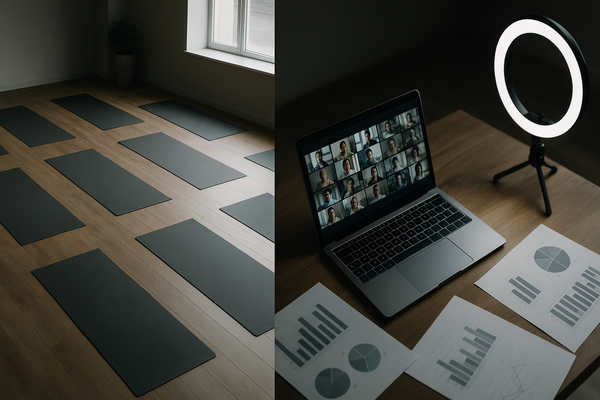
For teachers focused on online instruction, technical equipment including cameras, microphones, ring lights, and tripods qualify as deductible when used exclusively for business. A $400 camera setup and $200 in lighting equipment represents a full $600 deduction in the purchase year.
Cleaning and Studio-Specific Supplies
Studio operators can deduct the full cost of sanitation supplies purchased for their facilities. Disinfectants, hand sanitizers, towels, and air purifiers all qualify as ordinary and necessary expenses for maintaining a safe practice environment. With post-pandemic heightened sanitation standards, these costs have increased substantially for many operators.
Mileage and Travel: Drawing the Line
Transportation deductions follow specific rules that trip up many instructors. For 2025, the standard mileage rate is 70 cents per mile, and teachers can deduct miles driven between studios, to private client sessions, or to weekend retreats they're leading.
The critical exception: you cannot deduct mileage from home to your primary studio, as the IRS treats this as non-deductible commuting. An instructor teaching at three locations who drives 15 miles between Studio A and Studio B, then 10 miles to Studio C, can deduct 25 miles at 70 cents per mile, or $17.50 for that day. Over a year of regular multi-location teaching, these miles accumulate to substantial deductions.
Education and Professional Development
Teacher training programs including 200-hour, 300-hour, or specialized certifications are deductible if they maintain or improve skills in your current career. This covers pre-natal, yin, restorative, and trauma-informed training. Workshop ticket costs, Yoga Alliance membership fees, and required continuing education units all qualify.
The key limitation: education that qualifies you for a new trade or business doesn't qualify. A physical therapist taking their first 200-hour yoga teacher training would have a harder time defending the deduction than an existing yoga teacher adding a specialty certification.
Contract Labor and Professional Services
Studio owners frequently overlook payments to independent contractors. If you hired a photographer for marketing shots, contracted a graphic designer for website work, or brought in substitute teachers for workshops or trainings, those payments are fully deductible.
These expenses require proper documentation. If you pay any contractor $600 or more during the year, you must issue them a 1099-NEC form and file a copy with the IRS. Failing to track these payments not only costs you deductions but can trigger compliance issues.
Sales Tax Compliance by State
Yoga services face varying sales tax treatment depending on location. In New York, yoga classes are exempt from sales tax, but in Texas they are taxable. Studio operators must determine whether services are taxable in their state and accurately collect and remit sales tax to avoid penalties.
This complexity extends to workshop sales, retail merchandise, and private sessions. Misclassifying taxable services as non-taxable represents a common audit trigger, as state revenue departments actively monitor wellness businesses.
What This Means for Studio Operators
Editorial analysis, not reported fact:
The pattern across overlooked deductions points to a documentation problem more than a knowledge gap. Most instructors understand conceptually that business expenses are deductible, but the exclusive-use requirements for home offices, the distinction between consumer and commercial music licenses, and the commuting-versus-business-travel rules create gray areas where teachers err on the side of caution and leave deductions unclaimed.
Studio owners face a different challenge: tracking contract labor, allocating shared expenses like utilities, and navigating state-specific sales tax rules requires systems that many small operators lack. The Section 179 equipment deduction represents perhaps the most underutilized provision, as owners who finance equipment over time may not realize they can expense the full purchase price immediately.
The practical step forward involves three actions. First, separate business and personal expenses completely, ideally through dedicated business bank accounts and credit cards. Second, photograph receipts immediately and categorize them monthly rather than at year-end. Third, consult with an accountant familiar with wellness industry rules before making major purchases or structuring contracts with other teachers. The cost of professional guidance typically pays for itself through identified deductions and avoided compliance errors.
Sources & Further Reading
- Yoga Journal's guide to teacher tax write-offs, covering common deductions and insurance considerations
- BeYogi's 2025 tax guide for yoga professionals, detailing music licensing and business expense rules
- Build Bunker's analysis of top five instructor deductions, including Section 179 equipment provisions
- Offering Tree's comprehensive deduction overview, with 2025 mileage rates and home office calculations
- FasterCapital's yoga center taxation guide, addressing state sales tax compliance and IRC Section 162 requirements
- Novo's studio business expense breakdown, featuring expert perspectives on commonly missed deductions
Editorial coverage of publicly reported industry developments. Yoga Studio Insider has no commercial relationship with any companies named.