Starting Yoga in 2026: Beginner Style Selection Guide
Evidence-based guidance on choosing your first yoga style, practice frequency that produces results, and building a sustainable home practice in the first 30 days.

Key Takeaways
- Hatha yoga is the consensus beginner-friendly style: Classes emphasize fundamental postures, conscious breathing, and unhurried transitions, giving new practitioners time to learn proper alignment and build confidence without intimidation.
- Consistency beats duration for measurable results: Research shows 20–30 minutes three times per week produces reductions in anxiety symptoms within 8 weeks, and practitioners notice changes in flexibility, sleep, and stress within two to four weeks of regular practice.
- Flexibility is a result, not a prerequisite: The common barrier "I'm not flexible enough" reflects a misunderstanding; a 2016 International Journal of Yoga study found 10 weeks of practice significantly improved flexibility, balance, and muscle strength in sedentary adults.
- Home practice requires minimal investment: Beginners need only a yoga mat and 5–10 foundation poses done well; props like blocks and straps can be substituted with household items such as books and scarves during the first month.
- Style selection should match current intentions, not popularity: Active learners may prefer Vinyasa flow, while stress relief seekers benefit from Restorative or Yin yoga; avoid Ashtanga and hot yoga styles during the first month.
- Multiple accessible formats support 2026 beginners: Options include YouTube videos for self-paced variety, live online group sessions for real-time feedback and motivation, and private virtual instruction for personalized coaching.
Why 2026 Is the Year for Beginner-First Programming
Approximately 34.4 million Americans—roughly 10% of the U.S. population—practice yoga today, and this year is seeing record interest in beginner programs. Multiple authoritative guides published between December 2025 and March 2026 emphasize "how to start" content, indicating peak search traffic and audience curiosity during this period. The convergence of sustained remote work adoption, heightened mental health priorities following the pandemic era, and widely accessible online platforms has made 2026 a critical year for converting curiosity into committed practice.
For studio owners and instructors, understanding what beginners actually need to succeed—and how they're choosing styles, venues, and practice formats—directly impacts retention rates and long-term revenue. Yoga has become more beginner-friendly through adaptive classes, chair yoga modifications, slow-flow Vinyasa styles, and beginner-focused online series, lowering traditional barriers to entry.
Health Benefits Driving Beginner Interest in 2026
Yoga ranks among the most popular methods to reduce stress, improve focus, and enhance overall well-being. Research from Harvard Health demonstrates that regular practice can lower blood pressure, boost immune function, and improve overall mental health. These evidence-based benefits resonate particularly strongly with the 2026 wellness consumer seeking measurable outcomes.
A 2016 study published in the International Journal of Yoga found that just 10 weeks of yoga significantly improved flexibility, balance, and muscle strength in sedentary adults. For anxiety reduction, a 2017 meta-analysis reviewing 17 randomized controlled trials found yoga significantly reduced anxiety symptoms. These timelines—measurable improvements within 8 to 12 weeks—provide concrete benchmarks instructors can communicate to manage beginner expectations.
The Beginner Decision Tree: Which Style to Start With
Hatha yoga remains the consensus first choice. Hatha classes emphasize fundamental postures, conscious breathing, and unhurried transitions, making this style optimal for those just beginning their journey. Classes move at a calm, steady pace, allowing ample time to learn proper alignment and develop body awareness. Poses are typically held longer than in flow styles, giving beginners space to breathe, adjust, and build confidence without feeling rushed.
Vinyasa or Flow yoga serves active learners. Vinyasa sequences link one pose to the next in a continuous, workout-like rhythm. This style suits beginners who prefer energetic movement and find slower-paced classes too static. Gentle or beginner Vinyasa classes modify the traditional flow to accommodate new practitioners.
Yin Yoga represents a growing 2025–2026 trend. In Yin practice, postures are held for approximately 3 to 5 minutes, targeting connective tissues—ligaments, joints, bones, and deep fascia networks—rather than muscles. Poses target specific meridians in the body and can deliver emotional as well as physical benefits. Many teachers have added sound meditation during Savasana, amplifying the relaxation effect and appealing to stress-focused beginners.
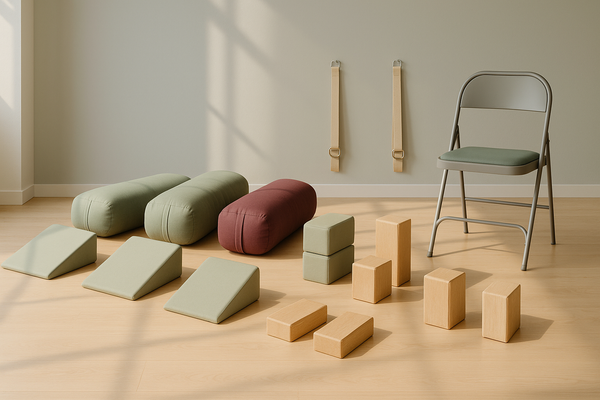
Restorative Yoga specializes in stress relief. Restorative classes use bolsters, blankets, and blocks to prop students into passive poses, allowing the body to experience benefits without exertion. This approach proves more rejuvenating than a nap for practitioners seeking nervous system regulation rather than physical conditioning.
Styles to avoid initially: Beginners should skip Ashtanga and hot yoga during their first month. These demanding formats require baseline strength, heat tolerance, and familiarity with sequencing that new practitioners have not yet developed. Key guidance on style selection emphasizes identifying core intentions rather than choosing based on popularity—sustainable practice aligns with what the body and mind currently need.
Practice Frequency That Produces Measurable Results
The evidence-based recommendation for beginners is clear: practice 20–30 minutes, three times per week, for the first month. Consistent practice at this frequency produces measurable reductions in anxiety symptoms within 8 weeks, according to research. Three sessions per week represents the effective minimum threshold. Sessions can be short—20 to 30 minutes—but consistency matters more than duration.
As Kripalu faculty member Evelyn notes, "Studies show that 10 minutes of yoga a day is more effective than 90 minutes every week." This principle of distributed practice over massed practice applies directly to beginner retention. Most beginners notice changes in flexibility, sleep quality, and stress levels within two to four weeks of consistent practice. Strength gains and deeper flexibility changes require longer timeframes, typically two to three months. The determining variable remains consistency: three shorter weekly sessions outperform one longer biweekly session.
Building a Sustainable Home Practice in the First 30 Days
Most beginners succeed with a small, repeatable system rather than endless variety. The first 30 days should remain clear and structured enough to actually follow. New practitioners don't need 100 poses; they need 5 to 10 foundation poses done well with proper alignment. Mastering this limited foundation before adding advanced transitions prevents injury and builds confidence.
Home practice format options in 2026 include:
- Apps and YouTube videos: Self-paced, offering wide variety and on-demand access
- Live online group sessions: Real-time practice with others, instructor feedback, and motivation through shared energy
- Private online instructors: One-on-one coaching for personalized feedback and faster confidence building
Practicing at home offers convenience and flexibility—no commute, no schedule constraints, and the ability to tailor routines to fit individual needs without committing more time than desired. Setup remains minimal: preparing the mat space the night before removes one morning friction point. Beginners don't need candles, music, or elaborate ambiance unless those elements enhance personal practice. A mat and a few quiet minutes suffice to slow down, breathe, relax, and experience the body through foundational stretches.
Equipment Reality Check: What Beginners Actually Need
Yoga classes may incorporate props including straps, blocks, blankets, and bolsters, but beginners don't need to purchase these immediately. Scarves or neckties substitute for straps, a stack of books replaces blocks, and pillows function as bolsters during the first weeks of practice. Studio classes provide all necessary equipment, so home practitioners can delay purchases until they've established consistent practice and identified which props genuinely support their routine.
The low barrier to entry—just a mat and household substitutes—removes the equipment excuse that delays many potential practitioners from starting. This messaging matters for studios marketing beginner programs: emphasizing minimal investment reduces perceived financial and commitment barriers.
Overcoming the Flexibility Myth and Other Beginner Barriers
The most common barrier beginners cite—"I'm not flexible enough"—reflects a fundamental misunderstanding. Flexibility is a result of yoga practice, not a prerequisite for starting. The 2016 International Journal of Yoga study demonstrated significant flexibility improvements in sedentary adults after just 10 weeks, directly contradicting this perceived barrier.
Additional barriers include intimidation around Sanskrit terminology, uncertainty about style selection, and confusion about whether to start in a studio or at home. Instructor communication that explicitly names and addresses these concerns—rather than assuming beginners will self-educate—improves conversion rates from curiosity to enrollment. Clear guidance on style characteristics, frequency expectations, and timeline for noticing results removes ambiguity that causes prospective students to delay starting.
What This Means for Studio Owners
Editorial analysis—not reported fact:
The 2026 beginner surge presents a retention opportunity, not just an enrollment spike. Studios that design beginner programming around the evidence—20 to 30 minute sessions, three times weekly, emphasizing Hatha or gentle Vinyasa foundations—align with how new practitioners actually succeed rather than legacy class formats designed for intermediate students.
Consider restructuring beginner offerings to mirror home practice realities: shorter sessions, repeatable sequences, explicit "you need 10 poses done well, not 100 done poorly" messaging. The data showing 10 minutes daily outperforms 90 minutes weekly suggests studios should offer or encourage supplemental short home practices between in-studio sessions rather than positioning studio attendance as the sole valid practice.
Marketing should directly address the flexibility myth and equipment concerns in intake materials and website copy. When prospective students see their specific barrier named and resolved before they even inquire, conversion friction drops. Offering hybrid models—one in-studio session plus two guided home practices via video link—matches the three-times-weekly evidence threshold while reducing the schedule and cost commitment that prevents sign-ups.
The trend toward Yin yoga with sound meditation and Restorative formats signals that stress relief, not physical conditioning, drives a significant portion of 2026 beginner interest. Studios emphasizing measurable mental health outcomes—anxiety reduction timelines, sleep quality improvements, blood pressure benefits—speak directly to this motivation in a way that generic "wellness" language does not.
Sources & Further Reading
- National Center for Complementary and Integrative Health: Yoga—What You Need to Know — Current U.S. yoga participation statistics and evidence-based health benefits overview
- Harvard Health: Yoga Benefits Beyond the Mat — Research on cardiovascular, immune, and mental health outcomes from regular practice
- International Journal of Yoga 2016 study on sedentary adults — Ten-week intervention demonstrating significant flexibility, balance, and strength improvements
- 2017 meta-analysis on yoga for anxiety — Review of 17 randomized controlled trials showing significant anxiety symptom reduction
Editorial coverage of publicly reported industry developments and published research. Yoga Studio Insider has no commercial relationship with any companies or researchers named.