Starting Yoga in 2026: Beginner Style & Home Practice Guide
The yoga market is doubling in 2026, driven by mental health demand. Here's how to guide beginners on style selection, home setup, and hybrid studio models.
Key Takeaways
- Market momentum: The global yoga market is projected to nearly double from 2025 levels in 2026, driven primarily by demand for mental health support and nervous system regulation rather than fitness alone.
- Style selection for beginners: Hatha and gentle Vinyasa are the most accessible entry points; avoid Ashtanga or hot yoga during your first month, and consider walking yoga if traditional mat practice feels intimidating.
- Foundation frequency: New practitioners should aim for 20-30 minutes, three times per week for the first month, mastering 5-10 foundation poses before adding transitions; consistency beats intensity.
- Home practice cost advantage: U.S. studio classes cost $15-30 per drop-in, making home practice a zero-cost alternative once initial gear investment (sticky mat, blocks, strap) is covered.
- Hybrid model for retention: Beginners benefit most from a few studio sessions to learn alignment and receive corrections, then supplementing with structured home practice using platforms like Sarah Beth's seven-day series.
- Breathwork fundamentals: Ujjayi breath, a slightly constricted nasal exhale creating an ocean sound, differentiates yoga from stretching and should be taught from day one.
Why Mental Health and Nervous System Regulation Drive 2026 Growth
The yoga industry is experiencing unprecedented expansion in 2026. The global yoga market is projected to nearly double from 2025 levels, fueled not by fitness trends but by a fundamental shift in practitioner motivation. Mental health now tops the list of reasons people seek yoga, with stress reduction, emotional balance, and nervous system regulation outpacing flexibility or strength goals.
Approximately 34.4 million Americans, roughly 10 percent of the U.S. population, currently practice yoga. This demographic spans urban professionals aged 25-45 managing desk-job stress, pregnant women and new mothers seeking gentle movement, seniors over 60 prioritizing low-impact mobility work, and athletes integrating yoga for recovery and cross-training.
Emerging formats reflect this wellness-first shift. Walking yoga saw a 2,400 percent surge in search interest, making it the second fastest-growing fitness trend of 2026, offering an accessible entry point for people intimidated by traditional mat-based practice.
Addressing Beginner Anxiety: Flexibility Myths and Research-Backed Reassurance
Many beginners are anxious about starting yoga because they believe they may not be fit or flexible enough to participate. This barrier persists despite evidence to the contrary. A study published in the International Journal of Yoga found that consistent practice significantly improves joint flexibility and muscle elasticity by targeting the fascia, the connective tissue that often feels tight after years of sitting.
Your role as an instructor is to reframe yoga as a practice that meets students where they are. Over 30 to 90 days, most beginners notice improved energy, flexibility, and mood, alongside better stress management and sleep. The message to communicate: you do not need to be flexible to start; consistency and patience matter most.
Style Selection Guidance: Hatha, Gentle Vinyasa, and Walking Yoga as Entry Points
Hatha yoga and Vinyasa yoga are generally considered the best styles for beginners. Hatha emphasizes holding individual poses with attention to alignment and breathing, giving new practitioners time to learn proper form without rushed transitions. Start students with Hatha if they have never practiced before, and steer them away from Ashtanga or hot yoga during their first month.
When marketing beginner-friendly classes, use descriptors like "Hatha," "gentle Vinyasa," "yoga for beginners," or "slow-flow" to signal appropriate pacing and accessibility. Walking yoga is a great entry point if students have been curious about yoga but felt intimidated by the poses and flexibility required to start. Consider adding a walking yoga workshop or short-format class to your schedule as a low-barrier onramp.
Foundation Frequency, Duration, and Core Pose Curriculum
New students should practice 20 to 30 minutes, three times per week, for their first month. Once a baseline is established, daily 10 to 15 minute sessions build consistency more effectively than sporadic longer classes. Master five to ten foundation poses before introducing advanced transitions or inversions.
Foundation yoga positions form the backbone of almost every practice. A solid beginner curriculum includes:
- Standing: Mountain Pose (Tadasana), Warrior I (Virabhadrasana I), Warrior II (Virabhadrasana II), Triangle Pose (Trikonasana)
- Floor: Child's Pose (Balasana), Cat-Cow (Marjaryasana-Bitilasana), Downward-Facing Dog (Adho Mukha Svanasana), Cobra (Bhujangasana)
- Supine: Bridge Pose (Setu Bandha Sarvangasana), Reclined Twist (Supta Matsyendrasana)
The breath is what separates yoga from stretching. The default technique for beginners is Ujjayi breath, a slightly constricted exhale through the nose creating a soft ocean sound. Teach Ujjayi from day one; it anchors attention and regulates the nervous system during physical challenge.
Home Practice Economics and Hybrid Model Opportunities for Studios
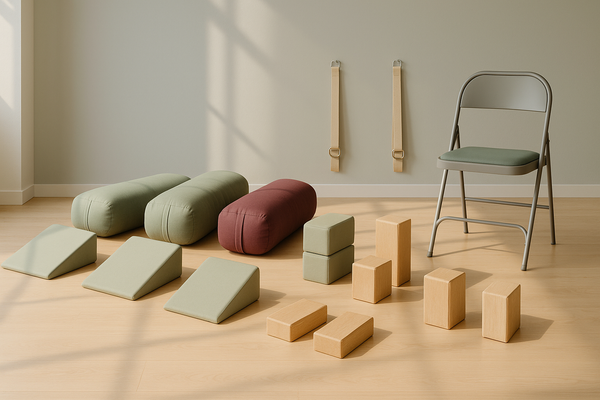
Yoga studios in the U.S. can cost anywhere from $15 to $30 per class, making cost a significant barrier for beginners exploring whether yoga fits their lifestyle. Home practice eliminates ongoing class fees once a student invests in basic gear: a sticky mat, form-fitting clothing, blocks, a bolster, and a strap.
Online yoga classes covering Hatha, Vinyasa Flow, Yin, and Restorative styles are now widely available. Platforms like Sarah Beth offer structured seven-day beginner series and 30-day yoga challenges, with an emphasis on mobility, flexibility, and relaxation.
Understanding this landscape is critical for retention. Studio classes are best for beginners who benefit from experienced teachers able to expertly guide through each pose and provide real-time corrections. Without that oversight, beginners practicing at home might miss helpful adjustments. However, studio yoga requires significant time and money, prompting many to shift exclusively to home practice after initial onboarding.
A hybrid model maximizes both revenue and student outcomes: position your studio as the place to learn foundations safely, then offer a supplemental home-practice guide, recorded class library, or monthly check-in option to maintain the relationship as students reduce in-person frequency.
Home Practice Setup: Environment, Gear, and Routine Design
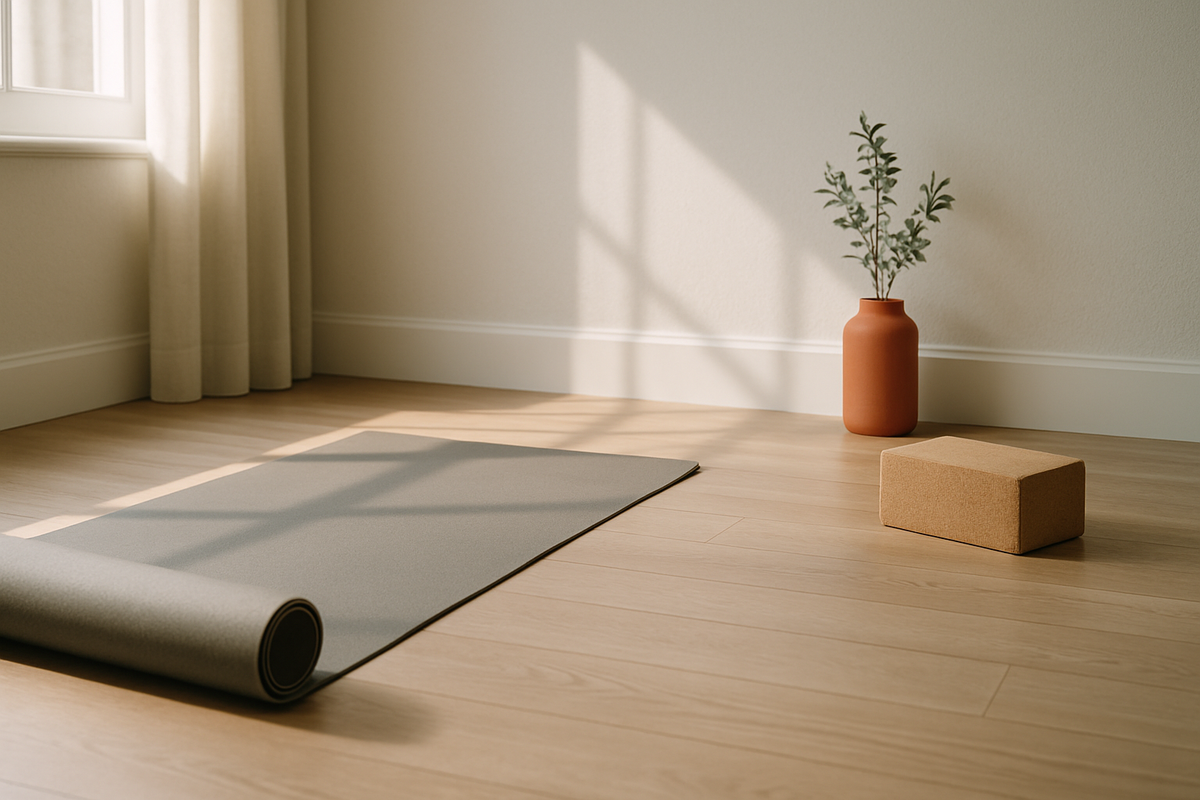
Create a refreshing space free of clutter and noise; students are more apt to practice at home when an inviting space is waiting. Recommend that beginners designate a small area for their mat, even if it is just a corner of a bedroom, and practice at the same time each day to establish routine.
Yoga does not require a lot of pricey equipment, but it is important to invest in the right gear from the get-go: a sticky mat, clothing that clings to the body, and a set of blocks, bolsters, and a strap to help modify trickier poses. Studio owners can generate supplemental revenue by curating beginner gear bundles and offering them at cost or slight markup as a service to new students.
Common Beginner Mistakes Instructors Should Actively Counter
If students practice yoga in a class environment with other people, they will most likely have the urge to compare themselves to others. Explicitly coach students to focus on their own mat, their own breath, and their own range of motion. Reinforce that yoga is a personal practice, not a performance.
Research shows that many people abandon New Year wellness goals within the first few weeks, not due to lack of motivation but because expectations are misaligned with realistic progress timelines. Set clear milestones: noticeable flexibility gains typically appear after 30 days of consistent practice, while nervous system and mood benefits often surface sooner.
What This Means for Studio Owners
Editorial analysis, not reported fact:
The 2026 beginner landscape rewards studios that position themselves as hybrid onramps rather than all-or-nothing membership plays. With home practice platforms offering zero marginal cost and walking yoga lowering the intimidation threshold, your competitive advantage lies in what online content cannot provide: real-time correction, community accountability, and safe foundational learning.
Design a beginner pathway that acknowledges economic and logistical realities. Offer a "Foundations" package of four to six studio sessions explicitly framed as preparation for confident home practice, bundled with a curated gear list and a recorded library of the ten essential poses taught in class. This approach respects students' budgets while establishing your studio as a trusted authority they return to for workshops, advanced training, or periodic form check-ins.
Market your Hatha and gentle Vinyasa offerings with explicit beginner language. Highlight breathwork instruction, specifically Ujjayi, as a unique value proposition that distinguishes your teaching from YouTube tutorials. And consider piloting a walking yoga series this spring: the 2,400 percent search surge indicates genuine demand for lower-barrier entry formats, and you can deliver that experience with minimal equipment in a park or outdoor space.
Finally, train your instructors to actively counter comparison culture and flexibility myths in every beginner class. The students who stay are those who internalize that yoga meets them where they are. Make that message impossible to miss.
Sources & Further Reading
- National Center for Biotechnology Information: Yoga market growth, demographics, style selection, and beginner guidance research — comprehensive source covering 2026 market projections, beginner anxiety, foundation poses, breathwork, and home vs. studio tradeoffs
Editorial coverage of publicly reported industry developments. Yoga Studio Insider has no commercial relationship with any companies named.