Mastering Cueing, Sequencing & Consent-Based Assists in 2026
How the 6-4-2 framework, action cues, thematic coherence, and consent-centered touch practices define professional teaching craft as the yoga industry matures.
Key Takeaways
- Sequencing frameworks provide structure without rigidity: The 6-4-2 approach covers Six Moves of the Spine (flexion, extension, side bending, twisting), Four Lines of the Legs (front, back, inner, outer), and two-sided movements to ensure balanced, comprehensive classes.
- Repetition with subtle variation keeps classes fresh: Teachers don't need total reinvention each week; instead, repeat sequences while varying cue delivery: descriptive cues week one, breath-linked week two, minimal week three, silence week four.
- Action cues deliver functional benefits beyond aesthetics: While aesthetic cues establish pose shapes, action cues focused on body parts, verbs, and directions drive the real health benefits through functional strength and mobility.
- Themes create narrative coherence and improve learning: Neuroscience shows brains learn best when meaning precedes details; themes weave centering, transitions, and closing into a story students retain, but movement choices must match thematic intent.
- Consent-centered assist practices are now industry standard: As of 2026, many studios default to verbal cueing and offer hands-on assists only upon request, using tools like consent cards or explicit opt-in systems to respect student agency.
- The 3-Cue Rule balances guidance with autonomy: Give three clear instructions to establish a pose, then pause and count to 10 before speaking again, allowing students to internalize cues and cultivate presence.
Why Sequencing Mastery Separates Exceptional Teachers from the Rest
The ability to craft thoughtful, balanced, and effective yoga classes is what keeps students returning week after week. Yet many 200-hour yoga teacher trainings leave instructors in one of two challenging situations: either they've memorized rigid sequences but lack tools to create their own (the "Franchise Cook" dilemma), or they struggle to adapt to students' evolving needs.
A refined framework addresses this gap. The 6-4-2 approach ensures comprehensive balanced movement: Six Moves of the Spine (flexion, extension, side bending left and right, twisting left and right), Four Lines of the Legs (front, back, inner, outer), and two-sided movements. This structure serves students' bodies effectively without locking teachers into inflexible scripts.
The most fundamental aspect of sequencing remains setting a clear objective. This objective guides choice of asana, breathing practices, and thematic elements while helping teachers narrow focus and increase effectiveness.
The Repetition Strategy: Keeping Classes Fresh Without Constant Reinvention
Teachers trained by Sage Rountree and others have learned that the real hack to keeping classes fresh is repetition with subtle variation rather than total reinvention class to class. Students don't need constant creativity but rather consistency with small, intentional variations.
This repetition strategy involves changing how cues are delivered week-to-week: week one gives lots of description, week two links breath to movement, week three minimizes cueing, and week four offers silence. The sequence itself remains stable, but the teaching methodology evolves, deepening student engagement and autonomy over the monthly cycle.
Cueing Excellence: From Aesthetic Shapes to Functional Action
Effective cueing is essential for guiding students through their practice safely and mindfully. The magic formula for clear instructions is straightforward: use a verb, body part, and direction, such as "Extend your right leg."
Action cues, as opposed to aesthetic cues focused on creating specific shapes, help uplevel teaching and keep sequences fresh while supporting health through functional strength and mobility. Aesthetic cues set up the shape; action cues are where real benefits of the pose happen. Internal cues that direct attention to body awareness and movement encourage conscious awareness, increase learning about the body, and improve proprioception and movement awareness.
The "3-Cue Rule" advises giving three clear instructions to get students into a pose, then pausing and counting to 10 slowly before saying anything else. This allows students to internalize instructions and practice presence. Teachers are encouraged to leave space for silence so students can find time to reflect and reap benefits; silence gives people time to process information and absorb the experience.
Theme-Building: Why Humans Need Stories, Not Just Directions
A theme is a through-line, a thread picked up in centering, touched during a cue or two, woven into a transition, and tied off in closing. It doesn't need to be complicated. Without a theme, students are following directions; with a theme, they're following a story, and humans are wired for stories.
From education research, neuroscientist John Medina's "Brain Rules" explains our brains are wired to learn best when presented with meaning before details. A theme is a thread of purpose weaving various parts of a yoga class into a complete experience, and explaining central meaning applies pedagogical principles to improve student retention.
A common pitfall is thematic mismatch: if a teacher introduces "decluttering" as a theme but delivers intense, jam-packed sequences with barely a breath in between, this represents a lost opportunity. Instead, the movement choice should deliver the intention of the theme, creating coherence between narrative and physical experience.
Hands-On Assists in 2026: Consent, Trauma-Awareness, and Verbal Alternatives
The question of whether to offer hands-on assists in yoga class is becoming a big topic of discussion among yoga teachers and studio owners in 2026, with key concerns about how to ask permission to assist without making students feel put on the spot. Yoga Journal recently published a piece on why more teachers are stepping back from hands-on assists, with reasons including the #MeToo movement exposing hidden dynamics in wellness spaces, more students getting hurt sometimes seriously, and growing awareness of trauma-informed teaching.
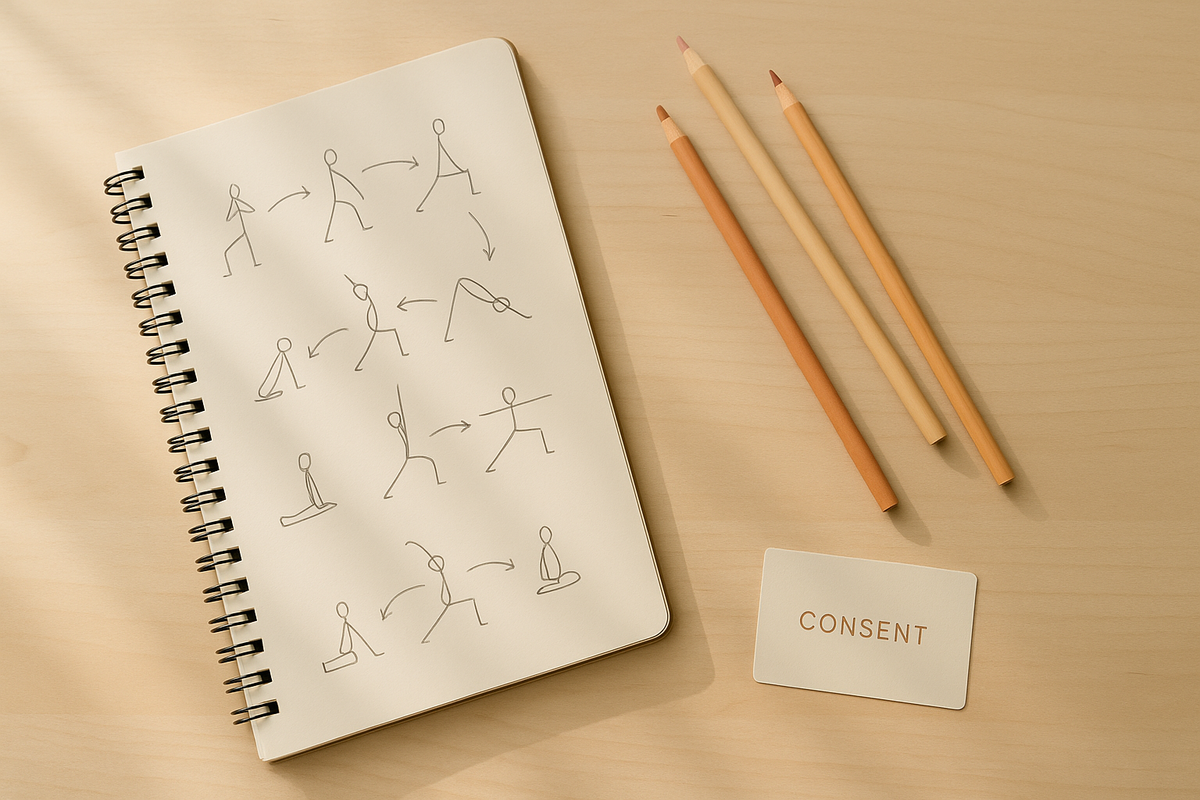
Many studios now default to verbal cueing and offer hands-on assists only upon request. Consent cards, little unobtrusive rectangles of paper, have emerged as an innovative solution where students flip cards to indicate openness to touch, giving agency and allowing students to choose or refuse touch without verbal announcement.
The Rubber Band Method®, developed by yoga educator and massage therapist Kiara Armstrong, offers a consent-based, anatomy-informed approach to providing hands-on assists. The method teaches instructors to read tissues, adapt touch to each student, and apply contact to enhance asana practice while emphasizing teacher safety and longevity. When hands-on work is offered, aggressive "deepening" adjustments are high-risk; instead, adjustments should focus on joint stacking and muscular engagement rather than increasing stretch, using minimal effective pressure that guides rather than forces.
Verbal assists involving no physical touch and using descriptive language are highly effective in guiding students into alignment. In public classes, verbal assists are often preferred to hands-on adjustments, especially with new students or large groups.
Training Evolution: How Teacher Education Is Catching Up
Learning how to teach is just as important as learning what to teach. Top yoga schools include dedicated sessions for teaching methodology, public speaking, and class design. Yoga teacher training programs now blend traditional practices with modern research from exercise science, physical therapy, neuroscience, and psychology, with evidence-based methodology preparing students for both personal practice and professional teaching careers.
Specialized yoga styles like Aerial yoga, trauma-informed yoga practice, prenatal yoga, and restorative/Yin styles are increasing in demand, reflecting the industry's diversification and the need for teachers with refined, specialized craft skills beyond foundational certifications.
What This Means for Studio Owners
Editorial analysis — not reported fact:
The shift toward consent-centered teaching and evidence-based sequencing represents both an operational challenge and a market differentiator. Studios that invest in continuing education for staff around sequencing frameworks, sophisticated cueing, and consent practices position themselves as professional environments that prioritize student safety and teacher development. This matters in 2026's competitive landscape where students increasingly research instructor credentials and studio culture before committing.
Consider auditing your studio's assist policy and teacher onboarding. Do new hires understand your consent protocols? Are teachers defaulting to hands-on work out of habit or genuine pedagogical need? Are they trained in verbal assist alternatives that serve diverse student populations, including trauma survivors and those with medical contraindications to touch?
For scheduling and retention, the repetition-with-variation model offers operational advantages. Teachers can develop signature sequences they refine over monthly cycles rather than scrambling to invent new classes weekly, reducing burnout while deepening student familiarity and progress. Market this as "progressive programming" rather than repetition, framing the four-week cycle as intentional skill-building.
Finally, thematic mismatch is a quality-control issue you can address in teacher reviews. Sit in on classes and assess whether movement choices align with stated themes. A teacher promoting "grounding" while racing through standing balance work signals either conceptual confusion or lack of planning, both teachable moments that elevate your studio's instructional standard.
Sources & Further Reading
- Mastering Yoga Sequencing: The Foundation of Advanced Teacher Training (Sage Rountree) — Overview of the 6-4-2 sequencing framework and common post-200-hour training challenges
- Yoga Sequencing Hacks to Keep Class Fresh (Sage Rountree) — Detailed breakdown of the repetition-with-variation strategy across four-week cycles
- Yoga Journal — Industry publication covering evolving perspectives on hands-on assists and trauma-informed teaching
Editorial coverage of publicly reported industry developments. Yoga Studio Insider has no commercial relationship with any companies named.