How to Keep New Yoga Students Past the Critical 90 Days
60-73% of new students vanish after one visit. Here's how style selection, home practice frameworks, and phased onboarding fix retention for studios in 2026.

Key Takeaways
- Studio retention crisis: Between 60% and 73% of new yoga clients won't return after their first visit, with most deciding whether to continue within the first 4-6 weeks—studios that use phased 90-day onboarding see up to 75% higher retention.
- Hatha and Vinyasa for first-timers: Hatha yoga is the recommended starting point for absolute beginners due to its focus on holding poses, alignment, and breath; avoid Ashtanga or hot yoga in the first month.
- Home practice minimums: Beginners need just 10-15 minutes daily or 20-30 minutes three times per week for the first month, mastering 5-10 foundation poses before progressing to advanced transitions.
- 67% practice at home: Two-thirds of US yoga practitioners prefer home practice via online classes and apps, driven by flexibility, affordability, and convenience; online yoga is projected to grow at 12.3% CAGR through 2027.
- Common injury triggers: Lower back pain is the most common yoga injury, typically caused by rounding the spine in forward folds and downward dog; beginners often skip warm-ups and forget to breathe while attempting poses.
- Mental wellness driving 2026 growth: Stress regulation and slowing down are now primary motivations for practice, with studios adopting trauma-aware principles and offering standalone 20-30 minute breathwork sessions as workshops and corporate wellness add-ons.
Why Half of New Students Disappear Within 90 Days
The US yoga industry is projected to be part of a global market reaching USD 269.1 billion by 2033, yet studios face a brutal retention problem. According to multiple industry analyses, between 60% and 73% of new clients won't return after their first visit. For studio owners, this represents lost revenue and wasted acquisition costs; for instructors, it signals a disconnect between how we teach and how beginners actually learn.
The drop-off happens because new fitness studio members quit in the first 90 days before forming an exercise habit, building community connections, or experiencing measurable results. Most students make their stay-or-go decision within the first 4-6 weeks. Studios that structure onboarding into three distinct phases—Foundation (Days 1-30), Habit Formation (Days 31-60), and Community Integration (Days 61-90)—report up to 75% higher retention rates compared to facilities with ad-hoc welcome processes.
The reasons students leave are predictable: unrealistic Instagram-fueled body expectations, no consistent schedule (if they don't anchor a specific Monday 6 p.m. slot, the studio fades from memory), and inadequate guidance on which style suits their goals. For instructors, this means the first month is not about advanced sequencing but about helping students choose four or five poses that feel great and building a specific, repeatable routine.
Matching Beginners to the Right Style in Month One
Style selection is the first decision point where studios can either build confidence or trigger overwhelm. Hatha yoga and Vinyasa yoga are generally considered the best styles for beginners, with Hatha focusing on holding individual poses with an emphasis on alignment and breathing. If a student has never practiced before, start with Hatha and avoid Ashtanga or hot yoga in the first month.
Vinyasa and Hatha remain the industry's top revenue drivers, while Restorative, Yin, and therapeutic classes are fast-growing segments. For studio operators, this suggests maintaining a robust Hatha foundations track while expanding slower-paced, trauma-informed offerings to capture the mental wellness cohort entering in 2026.
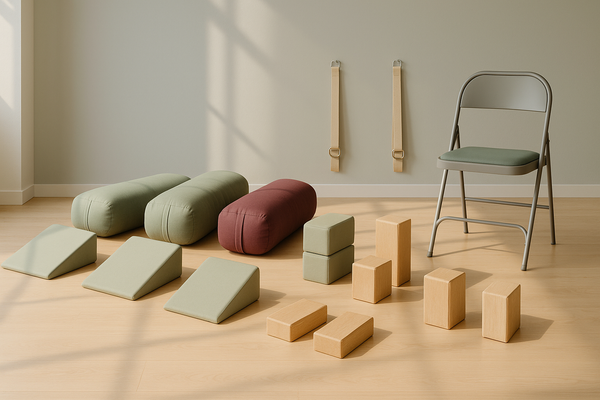
Beginner-friendly classes should move at a slower pace, provide clear cues without assuming Sanskrit fluency, offer modifications using props like chairs or blocks, prioritize joint safety by avoiding advanced inversions, and keep the focus on breath. According to instructor guidance compiled by online platforms, many beginners are so preoccupied with nailing a pose that they completely forget to breathe, which both increases injury risk and defeats the stress-regulation purpose that drew them to yoga in the first place.
Building a Sustainable Home Practice for New Practitioners
Home practice is now the dominant mode: 67% of yoga practitioners prefer to practice at home through online classes, apps, personal practice, or private lessons, compared to 43% at gyms and 38% at studios. The online yoga sector is projected to grow at a CAGR of 12.3% from 2021 to 2027, driven by busy schedules, long commutes, and rising gym costs that make home workouts appealing.
For instructors developing digital offerings or onboarding packets, the home practice framework is straightforward: each day requires just 10-15 minutes for beginners, with consistency mattering more than intensity. A recommended first-month structure is 20-30 minutes, three times per week, mastering 5-10 foundation poses before adding advanced transitions, and tracking consistency for 30 days so progress stays objective.
Creating a dedicated area at home helps establish routine. According to Yoga International's beginner guidance, this space needn't be large, pretty, or particularly Zen; even a sliver of floor can become a trigger for practice. The key is choosing four or five poses that feel great so students feel compelled rather than obligated to roll out their mat. Studios can support this by providing printable pose cards, 15-minute video sequences, and simple habit-tracking tools as part of new-member packets.
Preventing the Most Common Beginner Injuries
Lower back pain is the most common yoga injury, likely resulting from rounding through the spine in poses like forward folds and downward facing dog. This is preventable with proper cueing and props, yet it remains prevalent because beginners often skip warm-ups and push themselves too hard, which goes against the purpose of yoga and causes injuries.
Many beginners jump straight into poses without warming up, leading to muscle strains. Studios should mandate a 5-10 minute warm-up at the start of every beginner class and explicitly teach students that props including blocks, straps, blankets, or even a wall are especially useful for yoga newbies, the elderly, or those recovering from injuries.
Instructors should emphasize learning foundations from an experienced teacher to build practice safely from the ground up. For home practitioners, this means offering virtual one-on-one alignment check-ins or hybrid models where students attend one studio class per week and supplement with guided online sessions that provide real-time feedback via video submission or live Zoom.
Mental Wellness and Trauma-Aware Teaching in 2026
In 2026, mental wellness is one of the main reasons people practice yoga; as daily life becomes faster and digitally saturated, yoga is increasingly valued as a way to slow down, regulate stress, and reset. Studios are responding by adopting trauma-aware and somatic-informed principles, with slower pacing, clear cueing, optional variations, and less focus on performance to create safety and accessibility for stressed, burnt-out, or returning practitioners.
Breathwork has become a standalone offering, with 20-30 minute pranayama sessions growing as workshops, digital add-ons, or corporate wellness programs. These sessions are low-impact, scalable, and appeal to the 71.84% female market and the 43.46% of practitioners aged 30-50 who are seeking stress relief more than athletic performance.
For studio operators, this trend suggests programming short-format breathwork classes during lunch hours, offering them as free community events to drive trial, and packaging them with employer wellness contracts where employees can join via Zoom without needing a mat or changing clothes.
What This Means for Studio Owners
Editorial analysis—not reported fact:
The retention data makes clear that your first 90 days determine whether a new student becomes a long-term member or a one-time trial. If you're losing 60-73% of walk-ins after the first visit, the problem isn't your teaching; it's the absence of a structured onboarding system. Consider dividing your new-student journey into three explicit phases with specific touchpoints: a welcome call in Week 1, a style-match consultation in Week 3, a community class invite in Week 6, and a progress check-in at Day 90.
The home practice dominance (67% of practitioners) and the 12.3% annual growth in online yoga present both a threat and an opportunity. Studios that treat digital as competition will lose; those that build hybrid models—one in-studio class per week plus curated home sequences, or virtual office-hour alignment reviews for home practitioners—will capture the convenience-seeking majority while maintaining the high-touch guidance that prevents the lower back injuries plaguing self-taught students.
Finally, the mental wellness and trauma-aware shift is not a niche; it's the core 2026 value proposition. If your beginner classes still emphasize athletic achievement, Instagram-worthy poses, and keeping up with the flow, you're misaligned with why people are walking through your door. Rebuild your Level 1 offerings around breath, slowness, optional modifications, and explicit permission to rest. Add standalone breathwork as a low-barrier entry product, price it at $10-15, and use it as a trial gateway to your full class packages.
Sources & Further Reading
- Mindfully Yoga: Yoga for Beginners—Market size projections, practitioner demographics, and style recommendations
- Yoga by Maya: Yoga for Beginners—Home practice frameworks, online growth projections, and style selection guidance
- Yoga International: The Beginner's Guide to Home Yoga Practice—Home setup, consistency strategies, and pose selection
- Happy Trainers: Yoga for Beginners Essential Guide—Retention statistics, injury prevention, mental wellness trends, and trauma-aware teaching
- Daily Burn: Yoga for Beginners—Style comparisons and beginner-friendly class characteristics
- Cleveland Clinic: How to Find the Best Yoga Class for You—Medical perspective on beginner safety and style matching
Editorial coverage of publicly reported industry developments. Yoga Studio Insider has no commercial relationship with any companies named.