Class Size & Capacity Planning for Yoga Studio Profitability
How room design, occupancy rates, and scheduling optimization determine studio profitability. Break-even requires 75-80% utilization, but boutique versus volume models demand different capacity targets.
Key Takeaways
- Space requirements: Mat-based yoga classes require 21-30 square feet per student for safe, comfortable practice, with a 20-student room needing 420-480 square feet of clear floor space minimum.
- Profitability threshold: Studios typically need 75-80% class occupancy consistently to reach break-even, with healthy operations maintaining 80-90% utilization over several months.
- Boutique versus volume trade-off: Classes of 10-15 students optimize personalized attention and retention, but standard studios accommodating 15-30 participants cap revenue at approximately $250,000-$300,000 annually without private services.
- Design constraints are permanent: Room sizing decisions made during build-out lock studios into capacity ceilings for 5-10 years, making pre-construction demand modeling critical.
- Schedule optimization beats raw member count: Every empty mat represents lost revenue against fixed rent; cutting classes averaging below 40% capacity and targeting steady 80% utilization across all time slots drives profitability more than maximizing class size.
The Physical Reality: Square Footage Determines Your Options
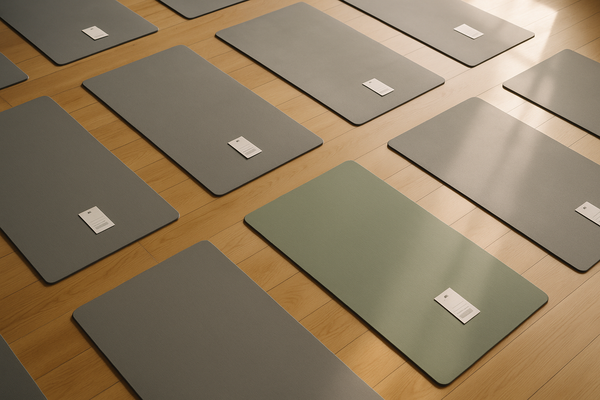
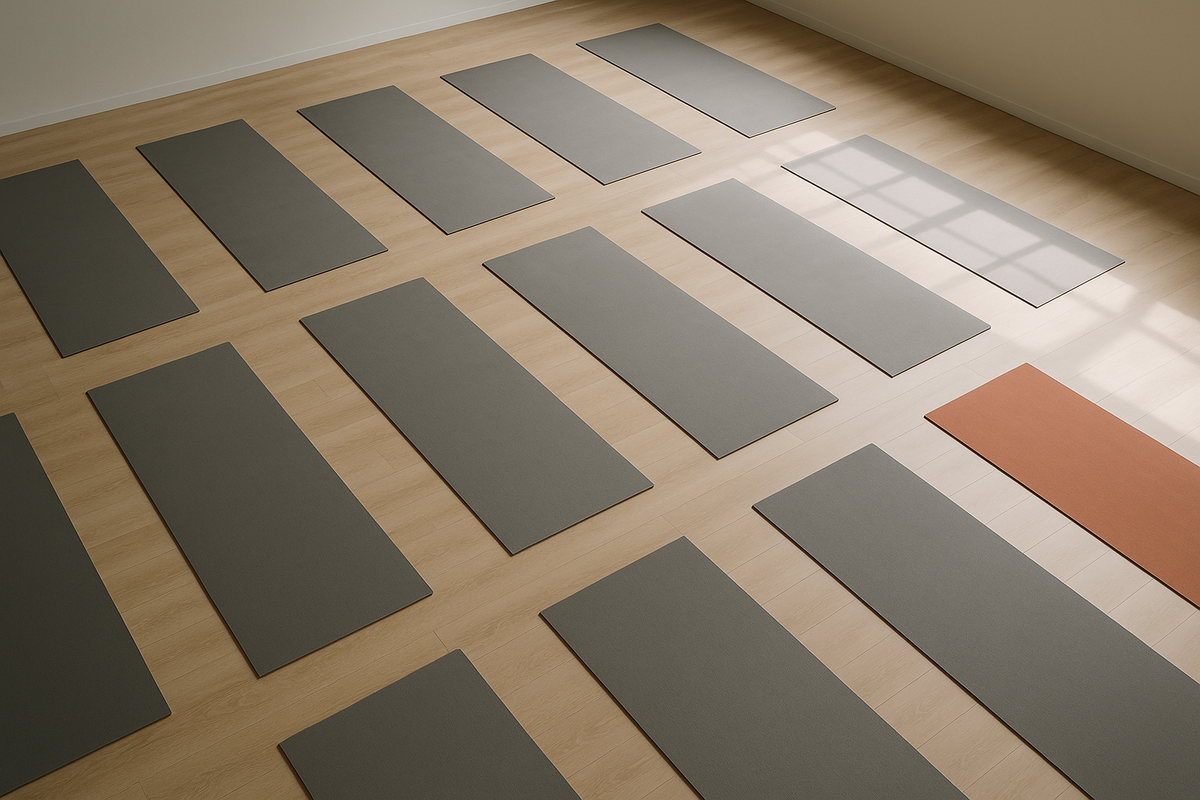
Class capacity begins with hard math. Mat-based yoga requires 20-25 square feet per person to allow full arm extension and safe transitions between poses. For comfortable practice where students avoid touching neighbors during flows, plan for 21-30 square feet per student, with tighter spacing acceptable for gentle classes and wider spacing essential for power or partner work.
A room accommodating 20 mats with adequate spacing requires roughly 420-480 square feet of clear floor space, excluding instructor platform and perimeter clearance. Standard studios occupy 1,200-2,000 square feet total, accommodating 15-30 participants per class depending on layout and amenities.
The critical insight: studio design decisions made during build-out become permanent constraints. A practice room sized for 18 mats is a room you will operate for 5-10 years working around the 18-mat ceiling on every class you schedule. This makes pre-construction demand modeling essential, not optional.
The Profitability Equation: Occupancy Rates Drive Break-Even
Break-even profitability is typically achieved when occupancy consistently reaches at least 75-80% of total class capacity. Healthy studios maintain 80-90% utilization over several months of operation. This means if your average class has 15 spots, you need to consistently fill 12 spots per session to sustain operations.
The revenue ceiling for group-class-only models is real. Mid-sized studios relying solely on group classes typically cap revenue at approximately $250,000-$300,000 annually with volatile cash flows. Every empty mat in a class represents lost revenue against fixed rent, making attendance tracking essential.
Track attendance by day, time, and instructor over 90-day windows and cut classes averaging below 40% capacity. For boutique fitness studios, 75% or greater utilization during peak times is the goal. If classes consistently run below 60% utilization, you are either leaving money on the table or pricing is misaligned with market demand.
The Boutique Versus Volume Trade-Off
A boutique yoga studio typically benefits from class sizes of 10-15 students to maintain a personalized experience, allowing instructors to give individual attention and ensure proper form. For beginner and alignment-based classes, smaller groups are essential because the teacher can correct postures safely and build trust with new practitioners.
The loyalty economics are compelling. Customer loyalty to fitness studios offering smaller class sizes and personalized teaching has been extremely high, especially among the prime 30-49-year-old demographic that accounts for the largest share of studio revenue. This segment has disposable income for boutique fitness and actively seeks structured classes over digital alternatives.
The tension emerges when fixed costs demand higher occupancy. Cramming too many students into a room to chase revenue creates immediate problems. A practice room that looks spacious when empty feels claustrophobic with mats touching, and students notice immediately. This dissatisfaction shows up in reviews and retention metrics, undermining the premium positioning that justifies boutique pricing in the first place.
When Instructor Capacity Becomes the Constraint
Experienced instructors can handle larger classes while maintaining quality, but there are limits. Class sizes over 25 are flagged as a red flag in yoga teacher training quality standards, signaling where individual attention becomes impossible regardless of instructor skill.
Adding members past physical capacity stresses instructors and increases churn risk. Approximately 42% of small studios face instructor retention challenges, and consistently overloaded classes contribute directly to burnout. The real operational lever is scheduling optimization, not simply maximizing member count in each session.
Scheduling Optimization as Revenue Strategy
The goal is steady 80% utilization across all scheduled class hours, not peak-time overflow and off-hour vacancies. A yoga center should aim to provide classes at various times throughout the day to meet diverse needs, and consistent attendance options can lead to a retention rate increase of 5-10%.
This requires ruthless data discipline. Identify which time slots, instructors, and class formats consistently underperform. If Tuesday 10 a.m. averages 35% capacity over three months while Monday 6 p.m. runs waitlists, the solution is not adding more members but reallocating instructor hours to high-demand windows and cutting low-performers.
Technology adoption supports this approach. Nearly 37% of studios now adopt AI-driven scheduling systems to optimize class timing based on historical attendance patterns, and 49% integrate wearable technology tracking to understand member engagement across sessions.
Market Pressures Shaping Capacity Decisions
External forces are tightening the capacity-planning calculus. Approximately 47% of small studios report rental cost pressures, increasing the urgency to maximize revenue per square foot. Simultaneously, 29% compete with fully digital platforms that have zero capacity constraints, forcing brick-and-mortar operators to justify premium pricing through superior in-person experience.
The seasonality challenge compounds planning complexity. About 38% of studios experience seasonal attendance drops, making year-round 80% utilization difficult without dynamic pricing or programming adjustments. Meanwhile, 25% report membership cancellations exceeding 15% annually, highlighting how overcrowded classes damage retention even as they boost short-term revenue.
What This Means for Studio Operators
Editorial analysis, not reported fact:
The capacity sweet spot is not a single number but a strategic choice between business models. Operators committed to the boutique premium model should design for 12-15 students maximum, invest in instructor development to justify premium pricing, and build retention through personalized attention. This path requires disciplined cost control and likely demands hybrid revenue streams such as privates, workshops, or teacher training to break the $300,000 group-class ceiling.
Operators pursuing volume economics need rooms sized for 25-30 students, dynamic scheduling systems to maintain 80% utilization across all time slots, and instructor talent capable of maintaining quality at scale. This path tolerates less personalization but demands operational excellence in class timing, marketing, and member onboarding to keep the pipeline full.
The fatal mistake is the middle path: building a 20-student room, pricing at boutique rates, but needing volume economics to cover rent. Before signing a lease or finalizing floor plans, model your break-even occupancy at realistic pricing, then add 20% buffer for seasonality and ramp time. If the math does not work at 70% of your designed capacity, the room is wrong or the location is wrong.
Sources & Further Reading
- Yoga Studio Design and Layout Planning, June 2026 analysis of how room sizing decisions create permanent operational constraints
- How to Calculate Yoga Studio Profitability, October 2025 guide to occupancy thresholds and break-even metrics
- Yoga Studio Revenue Potential and Cost Analysis, April 2025 industry benchmarks for group-class revenue ceilings
- Pilates and Yoga Studios Market Analysis, March 2026 report on operational challenges and technology adoption trends
- Space Requirements Planning Guide for Yoga and Pilates Studios, practical square footage standards by class format
Editorial coverage of publicly reported industry developments. Yoga Studio Insider has no commercial relationship with any companies named.