Beyond the Block: Props & Equipment in 2026 Studios
The yoga props market is projected to hit $7.5B by 2033, but 65% of studios replace equipment every 1–2 years. Smart sourcing, sustainability, and ROI matter.

Key Takeaways
- Yoga props market growth: The accessories market reached USD 3.2 billion in 2024 and is projected to hit USD 7.5 billion by 2033, with specialized props like blocks, straps, and bolsters driving a 9.8% annual growth rate through increased awareness of injury prevention and accessibility needs.
- Equipment replacement costs: Over 65% of yoga studios replace their props every 1–2 years due to poor-quality equipment or unreliable suppliers, making wholesale sourcing decisions critical to profit margins.
- Sustainability expectations: Biodegradable cork blocks and organic cotton bolsters have become standard expectations for eco-conscious practitioners, with cork offering durability, comfort, and lower costs than plastic or wood alternatives.
- Wholesale pricing advantages: Bulk purchasing from reliable yoga equipment suppliers significantly reduces per-item costs while ensuring consistent quality and design across inventory, with studios needing to balance pricing against durability rather than choosing the cheapest options.
- Material standards for commercial use: Commercial mats require 4–6mm thickness for the balance of comfort and stability, while prop selection should prioritize materials meeting professional safety standards, grip quality, and long-term durability over retail-grade equipment.
Why Studios Are Replacing Props Every 1–2 Years
The commercial yoga equipment landscape presents a costly challenge for studio operators. According to market research data, over 65% of yoga studios replace their yoga props every 1–2 years due to poor-quality equipment or unreliable suppliers. This replacement cycle directly impacts operational budgets, particularly as the yoga accessories market reached USD 3.2 billion in 2024 and is estimated to reach USD 7.5 billion by 2033, growing at a 9.8% compound annual growth rate from 2026 to 2033.
The durability problem stems from sourcing decisions made under price pressure. Studios working with wholesale suppliers must evaluate materials, construction quality, and safety standards rather than selecting the cheapest available options. Finding the right wholesale yoga props supplier ensures equipment meets professional standards while maintaining long-term durability, directly affecting the bottom line when replacement cycles extend from 12 months to 24 or 36 months.
The Commercial Sourcing Calculus: Bulk Pricing vs. Quality Thresholds
Buying yoga props wholesale provides several operational advantages: wholesale pricing significantly reduces the cost per item compared to retail purchases, working with a reliable supplier ensures all equipment maintains the same design and quality across classes, and a trusted bulk supplier ensures studios can restock equipment whenever needed without disrupting class schedules.
However, pricing plays a crucial role in maintaining healthy profit margins. While it may be tempting to choose the cheapest option, extremely low prices can indicate compromised quality. Studios should compare pricing structures from multiple wholesale suppliers and assess what they receive for the cost, including requesting samples to test grip, comfort, and safety standards before committing to bulk orders.
For commercial mats specifically, thickness and cushioning matter. Mats that are too thin lead to discomfort and potential student injury claims, while mats that are too thick make it harder to maintain balance in standing poses. A 4–6mm standard thickness is ideal for most yoga practices, balancing joint protection with stability.
Cork, Organic Cotton, and the New Sustainability Baseline
In 2026, biodegradable cork blocks and organic cotton bolsters are now standard expectations signaling a studio's commitment to environmental values, not premium upgrades. The demand for plastic-free practice spaces is rising, with studios replacing PVC mats with natural rubber or cork alternatives as practitioners increasingly view eco-friendly choices as an extension of yoga's principle of ahimsa, or non-harming.
Cork is a particularly practical option for yoga blocks: despite being less expensive and lighter than plastic and traditional wood, cork blocks are still durable and don't give in to pressure when squeezed. They're more comfortable to grip because of their natural texture, and natural cork stands up to crumbling on edges and corners better than foam alternatives. Many brands now use recycled materials in blocks, wheels, and bolsters, with studios looking for certifications like GOTS (Global Organic Textile Standard) or FSC (Forest Stewardship Council) when evaluating suppliers.
Leading players adapting to these material expectations include Lululemon, Manduka, Gaiam, Jade Yoga, Hugger Mugger, and Liforme. Manduka creates yoga mats, props, and apparel in an eco-friendly process while minimizing waste, carefully selecting materials manufactured emissions-free, zero waste, and free of toxic chemicals and dyes, and partners with The Renewal Workshop in an effort to recycle used yoga mats. Jade Yoga, based in Conshohocken, Pennsylvania, has produced mats, props, and cleaning products since 2000, focusing on the tools needed to practice yoga comfortably on a daily basis.
Market Growth Drivers: Streaming, Accessibility, and Specialized Props
Yoga participation rates in the U.S. have increased by over 50% since 2012, reaching approximately 36 million practitioners according to recent government reports. The proliferation of online yoga classes and streaming services has democratized access to yoga, making it more accessible across socioeconomic and geographic boundaries and encouraging consumers to invest in home-based accessories.
This expansion has driven demand for specialized props. The fastest-growing segment is specialized props, including yoga blocks, straps, and bolsters, driven by increased awareness of injury prevention, accessibility needs, and the rise of personalized practice routines. The yoga props market stood at USD 1.2 billion in 2024 and is forecast to reach USD 2.5 billion by 2033, registering a 9.5% CAGR from 2026 to 2033.
Beyond Blocks: Wheels, Smart Props, and Therapeutic Equipment
Newer prop categories are reshaping studio inventory decisions. The yoga wheel is becoming a newer trend in yoga classes, though not all studios may have yoga wheels in stock yet. A yoga wheel, a circular prop with a padded surface, helps deepen stretches, improve balance, and relieve tension, and assists practitioners moving into backbends by offering support and alignment when muscles aren't yet strong enough.
Technology is entering the props space as well. YogiFi by Wellnesys offers an intelligent yoga mat system with pressure sensors, motion tracking, and real-time feedback, though adoption in commercial studios remains limited as of mid-2026 due to cost and durability questions.
Therapeutic and restorative props are increasingly seen as practice anchors rather than optional accessories. Therapeutic yoga takes a softer, more supportive path compared to fast-paced yoga styles, grounded in the idea that practitioners need time, space, and support to release tension and move freely, with props as essential tools in that process.
Storage Infrastructure and Studio Organization
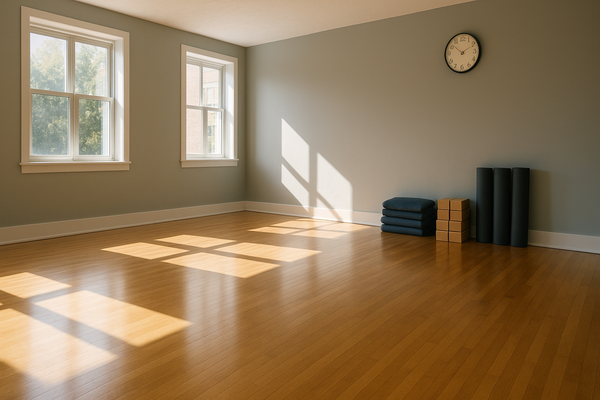
Keeping commercial yoga equipment organized and easily accessible is crucial in maintaining an efficient, professional studio, as disorganized spaces can create unnecessary stress for both clients and instructors. Racks and shelves that neatly and safely accommodate mats, blocks, and straps, including wall-mounted options, can save floor space and keep studios looking tidy. This infrastructure investment often gets overlooked in initial studio buildouts but directly affects class turnover efficiency and student perception of professionalism.
What This Means for Studio Owners
Editorial analysis — not reported fact:
The shift from viewing props as commoditized purchases to strategic infrastructure investments changes how studios should approach equipment budgets. With two-thirds of studios replacing props annually or biannually, the total cost of ownership over three to five years becomes the relevant metric, not the initial wholesale price per block or strap. A cork block that costs $3 more per unit but lasts 30 months instead of 12 months delivers better ROI than the cheapest foam alternative.
Sustainability expectations create both risk and opportunity. Studios that continue using PVC mats and plastic blocks in 2026 face potential brand perception problems with eco-conscious practitioners, who now represent a significant portion of the 36 million U.S. yoga participants. Conversely, studios that can credibly communicate their materials choices (GOTS-certified cotton, FSC-certified cork, partnership with recycling programs like Manduka's) gain differentiation in competitive markets.
The operational question is whether to stock emerging categories like yoga wheels and smart mats. For most studios, wheels offer a practical middle ground: lower cost than smart props, clear therapeutic and accessibility benefits, and appeal to students seeking variety. Smart props remain a watch-and-wait category until durability data emerges and pricing drops to viable commercial levels.
Finally, the storage and organization infrastructure deserves line-item budget attention. Wall-mounted storage that reduces floor space needs and speeds class transitions between back-to-back sessions can enable an additional class per day in constrained schedules, directly impacting revenue potential.
Sources & Further Reading
- Market Research Future: Yoga Accessories Market Research Report — comprehensive data on market size, growth projections, specialized props trends, commercial sourcing considerations, material innovations, and leading brands through 2033
- CDC National Center for Health Statistics: Yoga Participation Data Brief — government data on U.S. yoga participation rates showing over 50% growth since 2012
Editorial coverage of publicly reported industry developments. Yoga Studio Insider has no commercial relationship with any companies named.